Mulberry backdrop
Entity Profile

Mulberry

Plant Level 1 — Concrete The Way of Nature Atlas ↗ #plant #tree #sericulture #silkworm

Mulberry (桑树) is a genus of deciduous trees in the family Moraceae, native to warm temperate and subtropical regions of Asia, Africa, and the Americas, known for its leaves as the sole food of silkworms.

Plant
primary type
Level 1
Concrete entity
27
relationships mapped
Overview

About Mulberry

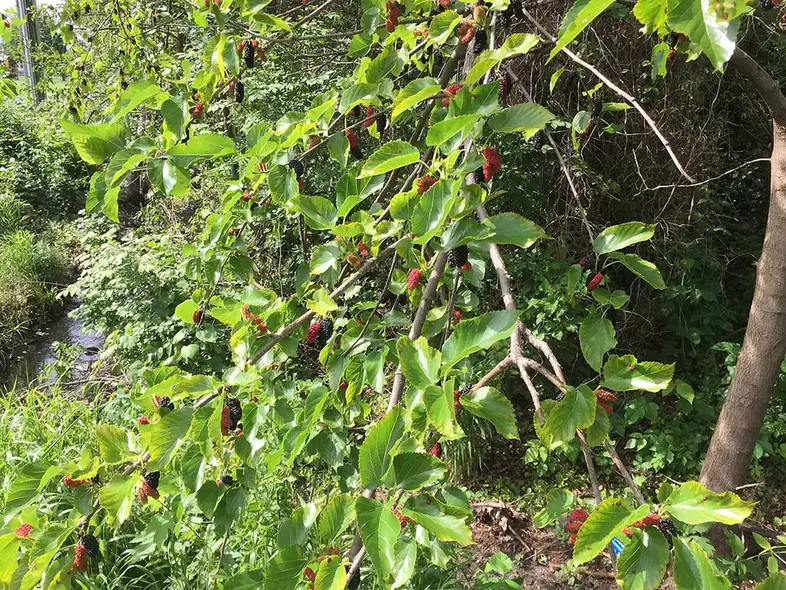
Mulberry (桑树, sāngshù) is a genus (Morus) of deciduous trees in the mulberry family Moraceae, comprising 10-16 species native to warm temperate and subtropical regions across Asia, Africa, and the Americas. The most significant species in East Asia are the white mulberry (Morus alba), native to northern China, and the black mulberry (Morus nigra), introduced from western Asia. Mulberry trees are fast-growing, reaching 10-15 meters in height, with heart-shaped leaves and aggregate fruits that resemble blackberries.

Mulberry leaves are the exclusive food source of the silkworm (Bombyx mori, 蚕, cán), making the tree the literal foundation of the sericulture industry. The white mulberry (Morus alba) is preferred for silkworm rearing because its tender leaves provide optimal nutrition for larval development. An estimated 6,000-10,000 silkworms require one mature mulberry tree to complete their life cycle, producing approximately 1 kilogram of raw silk. This relationship between mulberry, silkworm, and silk production (蚕桑, cánsāng) has shaped Chinese civilization for over 5,000 years.

The cultural significance of the mulberry tree in Chinese civilization cannot be overstated. The ancient practice of sericulture—domesticated silkworms feeding on mulberry leaves—was considered so valuable that its secrets were guarded for millennia, giving rise to the legendary Silk Road (丝绸之路, sīchóu zhī lù) trade network. In classical Chinese poetry, the mulberry tree often appears as a symbol of rural life, home, and agricultural abundance. The phrase "桑梓" (sāngzǐ, literally "mulberry and catalpa") became a classical metaphor for one's native village or homeland.

Beyond sericulture, mulberries produce sweet, nutrient-dense fruits rich in vitamin C, iron, and resveratrol. The fruits are eaten fresh, dried, or made into wine, jam, and traditional medicinal preparations. In traditional Chinese medicine, mulberry leaves (桑叶, sāngyè) are used to treat colds, fever, and eye inflammation, while the fruit (桑葚, sāngshèn) is prescribed as a blood tonic. The tree's bark (桑白皮, sāng bái pí) is used to treat cough and edema. Mulberry wood is also valued for its durability and used in furniture making and sporting goods.
Relationship Network

How Mulberry connects

Each relationship represents a meaningful semantic link between Mulberry and other entities in the Atlas knowledge graph.

Seasonal Timing

Mulberry across the solar year

These 24 solar terms mark when Mulberry appears, peaks, or transforms through the seasons.

谷雨 Spring

Grain Rain

Solar term #6 · Apr 19-21 · Earth

Fruit ripens in late spring

View on Dao of Seasons ↗
立夏 Summer

Start of Summer

Solar term #7 · May 5-7 · Fire

Peak fruit season

View on Dao of Seasons ↗
夏至 Summer

Summer Solstice

Solar term #10 · Jun 20-22 · Fire

Late mulberry fruit season

View on Dao of Seasons ↗
Entity Constellation

Entities connected to Mulberry

These entities share semantic relationships with Mulberry in the Atlas knowledge graph.

Silkworm

Animal L1

Silkworm (蚕, cán) is the larva (caterpillar) of the domestic silkmoth (Bombyx mori), an insect of the family Bombycidae

Silk

Artifact L1

Silk (丝绸, sīchóu) is a natural protein fiber produced by the silkworm (silkworm) (Bombyx mori) as it forms its cocoon

Bamboo

Plant L1

Bamboo (竹子) is a fast-growing grass species in the subfamily Bambusoideae, native to East and Southeast Asia, valued for ...

Rice

Ingredient L1

Rice (米/稻) is the seed of Oryza sativa, a cereal grain that is the staple food for more than half the global population, ...

Jiangnan

江南
Place L1

Jiangnan (江南, literally 'south of the Yangtze') is a culturally and historically rich region in southeastern China, enco ...

Sichuan

四川
Place L1

Sichuan (四川, Sìchuān) is a province in southwestern China, renowned for its dramatic topography encompassing the Sichuan ...

Shen Nong

神农
Person L1

Shen Nong (神农, Shén Nóng, "Divine Farmer") is a legendary cultural hero and mythological emperor of ancient China, tradi ...

Lotus

Plant L1

Lotus (莲花) is an aquatic perennial plant of the genus Nelumbo, native to Asia and Australia, revered in Buddhism and Hin ...

Calligraphy

Practice L1

书法 (Shūfǎ) is the art of expressive brush writing that embodies China's philosophical and aesthetic traditions. Combinin ...

Yangtze River

长江
Place L1

The Yangtze River (长江, Cháng Jiāng) is the longest river in Asia and the third-longest in the world, flowing 6,300 kilom ...

Fermentation

Practice L1

发酵 (Fājiào) is the microbial transformation of ingredients into preserved, flavour-rich foods central to Chinese cuisine ...

Panda

熊猫
Concept L1

The panda (熊猫, xióng māo) is an iconic species native to the bamboo forests of Sichuan, Yunnan, and the Yangtze River ba ...

Yunnan

云南
Place L1

Yunnan (云南, Yúnnán, 'south of the clouds') is a province in southwestern China renowned for its extraordinary biodiversi ...

Cicada

Animal L1

Cicada (蝉, chán) is an insect of the order Hemiptera, infraorder Cicadomorpha, known for the loud, distinctive mating ca ...

Ritual

Concept L1

Ritual (仪式, yíshì) refers to formalized patterns of conduct that connect human life to cosmic and social order. Through ...

Natural Timing

Concept L1

Natural Timing (自然时序) is the rhythm of seasons, the succession of natural events, and the wisdom of acting in accord wit ...

Bamboo Basket

Artifact L1

Bamboo Basket (竹篮, zhú lán) is a woven container crafted from split bamboo strips, used across East Asia for thousands o ...

Persimmon

Ingredient L1

Persimmon (柿子) is the sweet, orange fruit of trees in the genus Diospyros, native to China and widely cultivated across ...

Naming

Also known as

桑树 (synonym) Sāngshù (synonym) Mulberry (synonym) Kuwa (Japanese) (synonym) Morera (synonym) Morus (synonym)
Atlas Role

Mulberry in the Atlas

What this entity provides

Mulberry (桑树) is the Atlas's keystone plant for the entire silk production chain. Its leaves are the exclusive food of the silkworm, making mulberry the literal foundation of sericulture—a practice that shaped Chinese civilization for 5,000 years and gave the Silk Road its name. Mulberry connects Plant to Animal (silkworm), Artifact (silk), Place (Jiangnan, Sichuan), and Concept (ecological-intelligence via the integrated mulberry-silkworm-pond system).

What it does NOT duplicate
  • silkworm (蚕)—which is the consumer of mulberry leaves, not the plant itself
  • silk (丝绸)—which is the final textile product, not the botanical source
Subsite References
dao-of-seasons

Silkworm rearing cycles synchronize with mulberry leaf emergence at Grain Rain—the first spring silkworm batch begins after Spring Festival.

missing-umami

Mulberries themselves are used in traditional preserves and wine, contributing to the sweet-savory spectrum.

atlasofheritage

The phrase '桑梓' (mulberry and catalpa) became the classical Chinese metaphor for one's native village.

Sources & References

References for Mulberry

Visual Gallery

Mulberry in imagery

Mulberry — visual reference
Watch

See Mulberry in motion

Noal Farm · 4.7M views · YouTube ↗

Wild Floridian · 227K views · YouTube ↗

Owner Site

The Way of Nature Atlas

Central Atlas — provides Overview pages for all entities. Does not produce original entity content, only aggregates and references.

ConceptCraftMountainRiverFestival