Cicada (蝉, chán) is an insect of the order Hemiptera, infraorder Cicadomorpha, known for the loud, distinctive mating call produced by males through specialized tymbal organs on their abdomen
Cicada (蝉, chán) is an insect of the order Hemiptera, infraorder Cicadomorpha, known for the loud, distinctive mating call produced by males through specialized tymbal organs on their abdomen. Over 3,000 species exist worldwide, with East Asia hosting a particularly rich diversity including the giant cicada (Cryptotympana atrata) and the evening cicada (Tanna japonensis). Adult cicadas are characterized by prominent compound eyes, two pairs of translucent wings, and a sturdy body typically ranging from 2 to 5 centimeters in length.
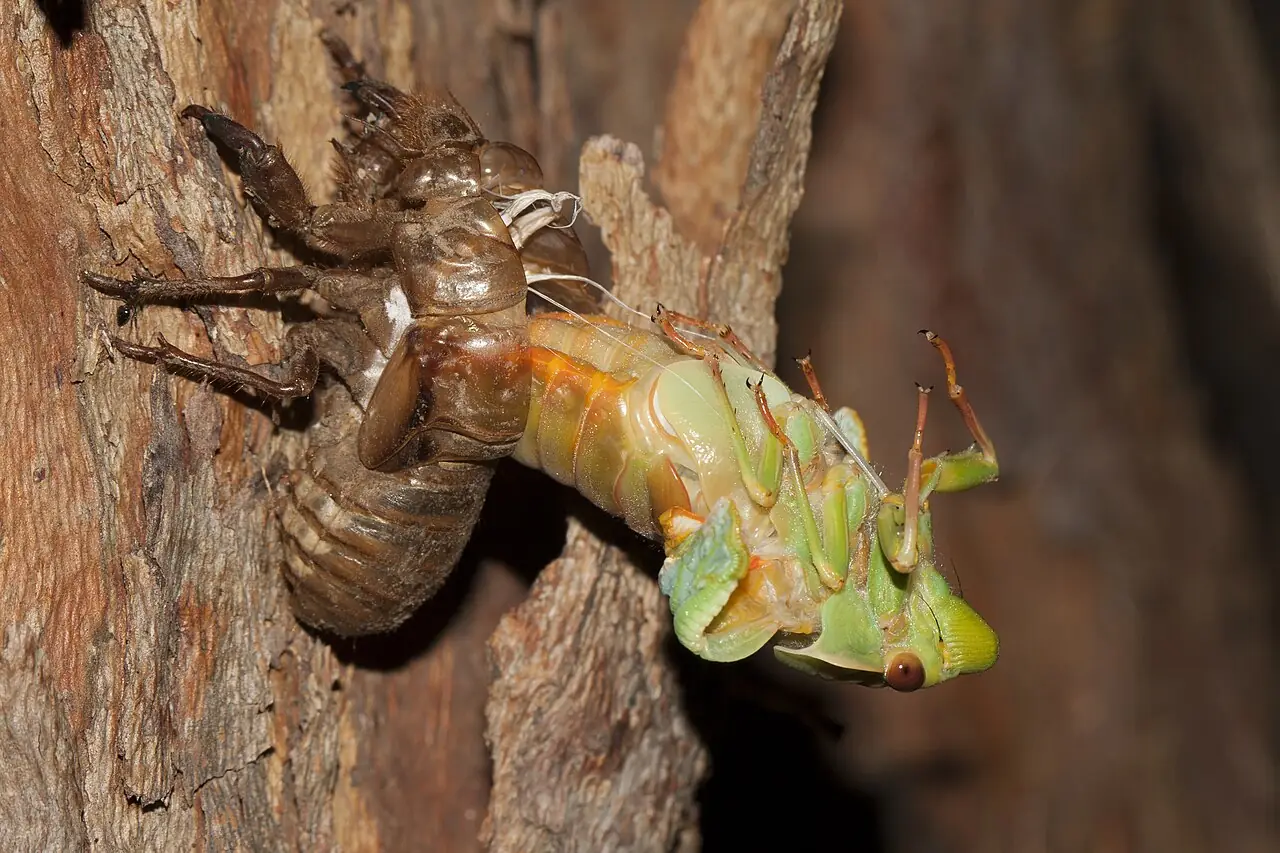
Cicadas spend most of their lives underground as nymphs, feeding on root sap over a developmental period that can span from two to seventeen years depending on the species. They emerge en masse in late spring and early summer, molting their exoskeletons to become winged adults. Their emergence is closely synchronized with the solar terms: activity peaks around the Summer Solstice (T-summer-solstice), reaches full vocal volume during Minor Heat (T-minor-heat), and continues into late summer through Major Heat (T-major-heat). The cicada's ephemeral adult stage—typically only four to six weeks—has made it a profound symbol in East Asian culture.
In Chinese literary and artistic tradition, the cicada (蝉, chán) embodies purity, transcendence, and reincarnation. Emerging from the dark earth to shed its shell and take flight, it became a metaphor for spiritual transformation—casting off worldly attachments. Ancient jade carvings of cicadas were placed on the tongues of the deceased during the Han dynasty, symbolizing rebirth. The cicada's song is also one of the defining sounds of summer in Chinese poetry, frequently paired with the swallow (swallow) as complementary seasonal motifs—the cicada's insistent drone and the swallow's swift passage marking the fullness and transience of warm months.
---
---
Each relationship represents a meaningful semantic link between Cicada and other entities in the Atlas knowledge graph.
These 24 solar terms mark when Cicada appears, peaks, or transforms through the seasons.
Solar term #10 · Jun 20-22 · Fire
Peak cicada season
View on Dao of Seasons ↗Solar term #12 · Jul 22-24 · Fire
Late summer activity
View on Dao of Seasons ↗Solar term #7 · May 5-7 · Fire
Cicada emergence signals summer beginning
View on Dao of Seasons ↗These entities share semantic relationships with Cicada in the Atlas knowledge graph.
Mulberry (桑树) is a genus of deciduous trees in the family Moraceae, native to warm temperate and subtropical regions of ...
Daoism (道教), the teaching of the Way, is a philosophical and religious tradition originating in ancient China that cente ...
Porcelain (瓷器, cíqì) is a ceramic material made by heating kaolin clay and other materials in a kiln at temperatures exc ...
Swallow (燕子, yànzi) is a small passerine bird of the family Hirundinidae, characterized by its slender, streamlined body ...
Dragonfly (蜻蜓, qīngtíng) is a predatory insect of the order Odonata, suborder Anisoptera, characterized by its elongated ...
Cicada (蝉) is the Atlas's primary sonic marker of summer. Its emergence synchronizes with the Summer Solstice through Major Heat solar terms, making it a living phenological indicator. Culturally, the cicada symbolizes purity, transcendence, and rebirth in Chinese tradition—its underground nymph stage and shed exoskeleton made it a Daoist metaphor for spiritual transformation and an iconic jade carving motif.
Cicada song peaks during Minor Heat and Major Heat—the defining soundscape of high summer.
Jade cicadas placed on the tongues of Han dynasty deceased symbolized the soul's rebirth.
BBC Studios · 2.8M views · YouTube ↗
Real Science · 1.7M views · YouTube ↗
Central Atlas — provides Overview pages for all entities. Does not produce original entity content, only aggregates and references.
Owner since 2026-01-01