Swallow (燕子, yànzi) is a small passerine bird of the family Hirundinidae, characterized by its slender, streamlined body, long pointed wings, and deeply forked tail
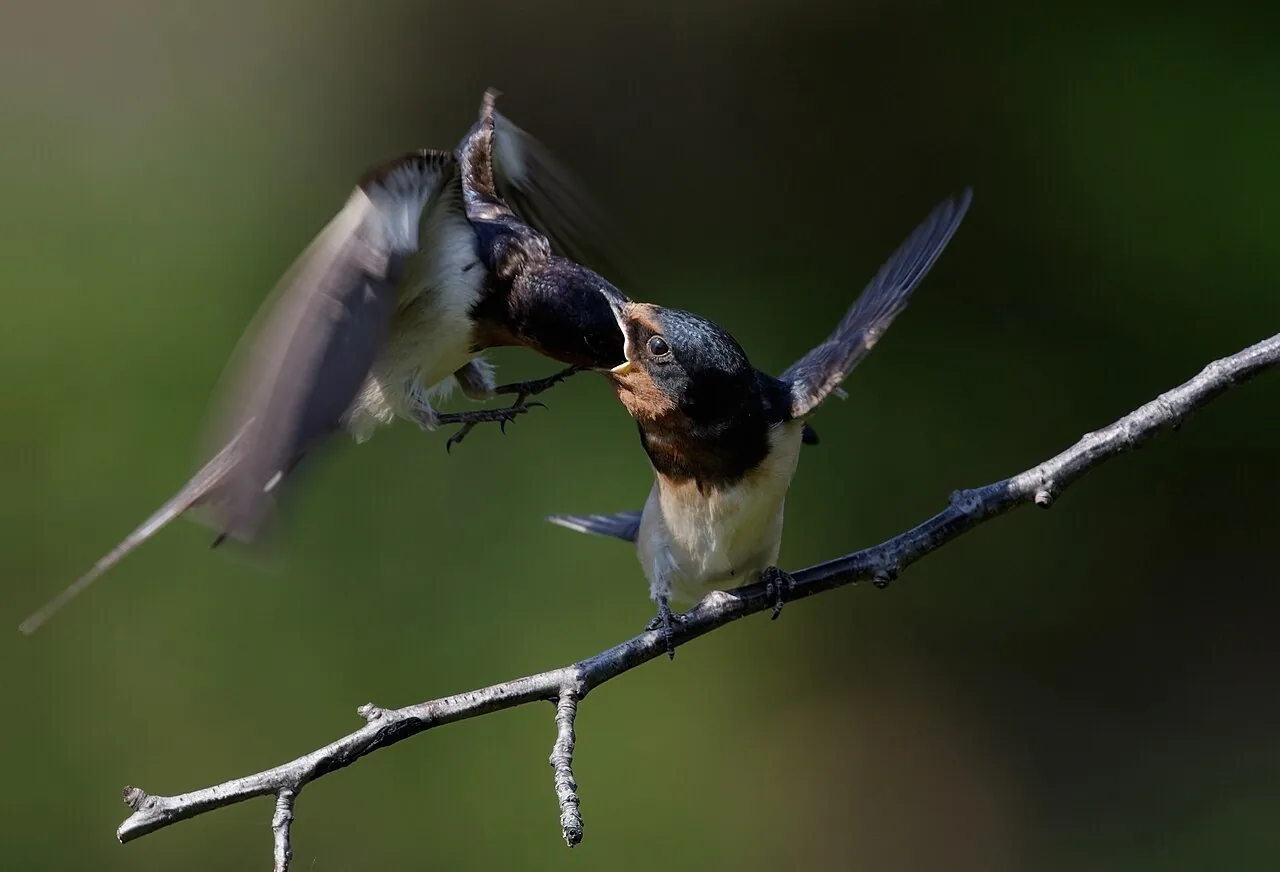
Swallow (燕子, yànzi) is a small passerine bird of the family Hirundinidae, characterized by its slender, streamlined body, long pointed wings, and deeply forked tail. Several species are native to East Asia, most notably the barn swallow (Hirundo rustica) and the red-rumped swallow (Cecropis daurica). Swallows measure 15-20 centimeters in length with a wingspan of 30-35 centimeters. Their plumage is typically iridescent blue-black above with pale or rufous underparts, and they are among the most recognizable birds across rural and urban East Asia alike.
Swallows are quintessential migratory birds whose arrival and departure mark the turning of seasons in the Chinese agricultural calendar. They winter in Southeast Asia and return to China in early spring—their first appearance coincides with the Clear and Bright (T-clear-and-bright) solar term in early April, and their numbers peak as they arrive for the Grain Rain (T-grain-rain) period. Swallows are active through the summer, raising two to three broods before departing southward before the Autumn Equinox. This migration pattern has made the swallow the definitive natural timing (natural-timing) signal for farmers and poets alike. They are closely associated with Jiangnan (jiangnan), where the sight of swallows darting over misty rice paddies and waterways defines the region's spring imagery.
In Chinese culture, the swallow (燕子, yànzi) is an overwhelmingly positive symbol representing spring, renewal, marital fidelity, and domestic happiness. Swallows traditionally build their mud nests under the eaves of homes—their choice of dwelling is considered auspicious, bringing good fortune to the household. The Chinese idiom "swallow knows the season" (燕知时节, yàn zhī shíjié) reflects the bird's role as a natural calendar. In classical poetry, swallows are paired with cicadas (cicada): the swallow signals spring's arrival, while the cicada chants through summer's peak—together marking the arc of warm months. The swallow's return each spring makes it a symbol of constancy and hope in an ever-changing world.
---
---
## Artifact (6)
---
Each relationship represents a meaningful semantic link between Swallow and other entities in the Atlas knowledge graph.
These 24 solar terms mark when Swallow appears, peaks, or transforms through the seasons.
Solar term #10 · Jun 20-22 · Fire
Active in summer
View on Dao of Seasons ↗Solar term #5 · Apr 4-6 · Wood
Return migration in spring
View on Dao of Seasons ↗Solar term #6 · Apr 19-21 · Earth
Swallow return coincides with Grain Rain
View on Dao of Seasons ↗These entities share semantic relationships with Swallow in the Atlas knowledge graph.
Cicada (蝉, chán) is an insect of the order Hemiptera, infraorder Cicadomorpha, known for the loud, distinctive mating ca ...
Jiangnan (江南, literally 'south of the Yangtze') is a culturally and historically rich region in southeastern China, enco ...
Natural Timing (自然时序) is the rhythm of seasons, the succession of natural events, and the wisdom of acting in accord wit ...
Swallow (燕子) is the Atlas's definitive spring arrival signal—a migratory bird whose return coincides with the Clear and Bright (清明) solar term, marking the season's turn. Its mud nests built under home eaves are considered auspicious, bringing good fortune. In classical poetry, swallows are paired with cicadas as complementary seasonal motifs: swallow announces spring, cicada chants through summer. Swallow connects Animal to Place (Jiangnan), Concept (natural-timing), and the solar term calendar.
The swallow's arrival at Clear and Bright (清明) and departure before Autumn Equinox make it the most reliable avian calendar marker.
The idiom 'swallow knows the season' (燕知时节) reflects the bird's role as a living natural calendar in Chinese culture.
In Jiangnan, the sight of swallows over rice paddies signals the season when fresh ingredients emerge.
Sign Meaning · 17K views · YouTube ↗
Cornell Lab of Ornithology · 8K views · YouTube ↗
Central Atlas — provides Overview pages for all entities. Does not produce original entity content, only aggregates and references.
Owner since 2026-01-01