Jiangnan backdrop
Entity Profile

Jiangnan

江南
Place Level 1 — Concrete The Way of Nature Atlas ↗ #water-town #yangtze #silk #tea-culture

Jiangnan (江南, literally 'south of the Yangtze') is a culturally and historically rich region in southeastern China, encompassing the water towns and fertile plains south of the lower Yangtze River. It includes parts of modern Jiangsu, Zhejiang, Anhui, Jiangxi, and Shanghai, and has long been celebrated as China's heartland of refined culture, trade, and natural beauty.

Place
primary type
Level 1
Concrete entity
14
relationships mapped
Overview

About Jiangnan

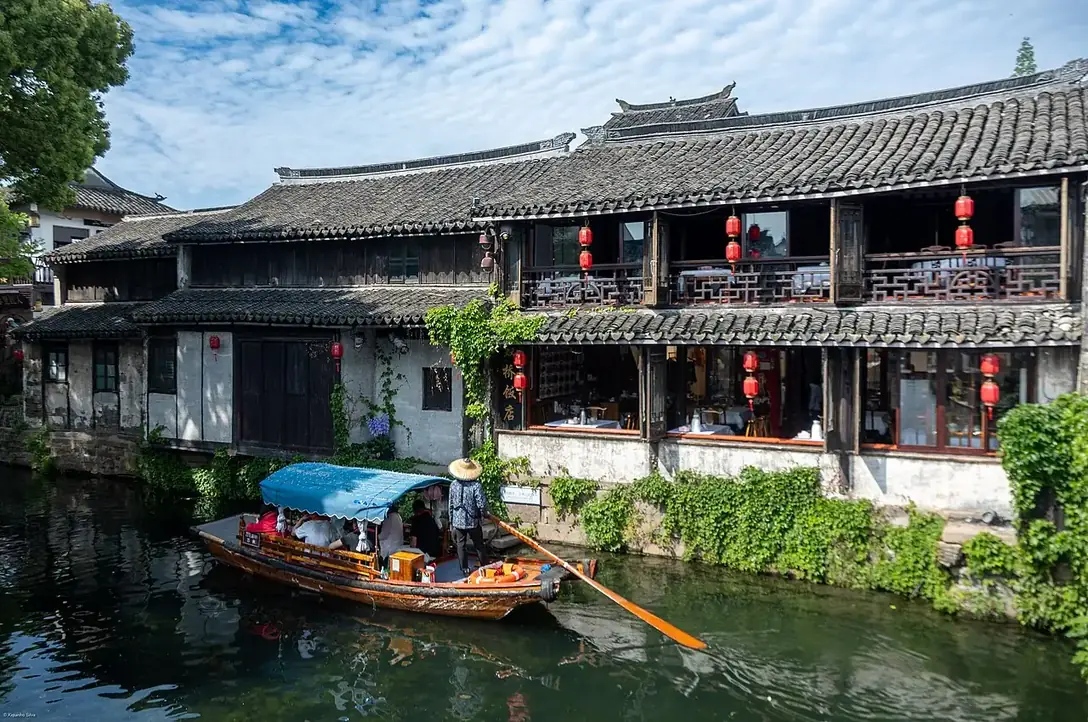
Jiangnan (江南, literally 'south of the Yangtze') refers to the fertile region south of the lower reaches of the Yangtze River (长江, Changjiang) in southeastern China. It encompasses the alluvial plains and intricate water networks of modern Jiangsu, Zhejiang, Anhui, and Shanghai. The landscape is defined by a dense web of rivers, canals, and lakes — including Lake Tai (太湖, Taihu) — with low hills rising gently from the floodplains. Countless water towns, connected by stone bridges and willow-lined canals, characterize its distinctive geography.

The region enjoys a humid subtropical climate with abundant rainfall and four well-defined seasons. These conditions create an exceptionally fertile environment where bamboo, mulberry (桑树, sangshu), rice, and lotus (莲花, lianhua) flourish. Jiangnan's waterways support rich aquatic ecosystems, and its mild winters allow for year-round cultivation. Many ingredients and materials originates_from jiangnan: bamboo thrives in its groves, mulberry leaves feed silkworms for silk production, the finest green teas are grown in its misty hills, and lotus roots are harvested from its ponds.

Jiangnan has been the cultural and economic heart of China since the Tang dynasty (618-907 AD). Its wealth, generated by rice surpluses, silk weaving, and maritime trade, supported an extraordinary flourishing of literature, painting, calligraphy, and tea culture. The region is deeply related_to tea and tea-brewing traditions, having shaped many of the classical methods still practiced today. It is also related_to silk production, with silk (丝绸, sichou) woven in its workshops traded along the Silk Road. The swallow, an iconic spring bird in Chinese poetry, is related_to jiangnan as a seasonal emblem of the region's beauty.

Jiangnan's fertile soils and temperate climate have made it a cradle of agricultural abundance. The tea, porcelain, calligraphy, and bamboo-basket traditions that originates_from this region continue to define its cultural identity. From the terraced tea plantations of Hangzhou's Longjing (龙井) to the mulberry groves of Huzhou, the products of Jiangnan's land and its people's craftsmanship sustain a legacy that reaches across centuries.
Relationship Network

How Jiangnan connects

Each relationship represents a meaningful semantic link between Jiangnan and other entities in the Atlas knowledge graph.

Entity Constellation

Entities connected to Jiangnan

These entities share semantic relationships with Jiangnan in the Atlas knowledge graph.

Panda

熊猫
Concept L1

The panda (熊猫, xióng māo) is an iconic species native to the bamboo forests of Sichuan, Yunnan, and the Yangtze River ba ...

Tea

Ingredient L1

Tea (茶) is an aromatic beverage made from the leaves of Camellia sinensis, originating in China over 4,000 years ago and ...

Bamboo

Plant L1

Bamboo (竹子) is a fast-growing grass species in the subfamily Bambusoideae, native to East and Southeast Asia, valued for ...

Mulberry

Plant L1

Mulberry (桑树) is a genus of deciduous trees in the family Moraceae, native to warm temperate and subtropical regions of ...

Yangtze River

长江
Place L1

The Yangtze River (长江, Cháng Jiāng) is the longest river in Asia and the third-longest in the world, flowing 6,300 kilom ...

Porcelain

Artifact L1

Porcelain (瓷器, cíqì) is a ceramic material made by heating kaolin clay and other materials in a kiln at temperatures exc ...

Silk

Artifact L1

Silk (丝绸, sīchóu) is a natural protein fiber produced by the silkworm (silkworm) (Bombyx mori) as it forms its cocoon

Swallow

Animal L1

Swallow (燕子, yànzi) is a small passerine bird of the family Hirundinidae, characterized by its slender, streamlined body ...

Lotus

Plant L1

Lotus (莲花) is an aquatic perennial plant of the genus Nelumbo, native to Asia and Australia, revered in Buddhism and Hin ...

Silkworm

Animal L1

Silkworm (蚕, cán) is the larva (caterpillar) of the domestic silkmoth (Bombyx mori), an insect of the family Bombycidae

Tea Brewing

Practice L1

Tea Brewing (泡茶, pào chá) is the everyday art and practice of preparing and serving tea with mindful attention. Rooted i ...

Calligraphy

Practice L1

书法 (Shūfǎ) is the art of expressive brush writing that embodies China's philosophical and aesthetic traditions. Combinin ...

Willow

Plant L1

Willow (柳树) is a genus of deciduous trees and shrubs in the family Salicaceae, commonly found near water in temperate re ...

Naming

Also known as

江南 (synonym) South of the Yangtze (synonym) Jiangnan region (synonym)
Atlas Role

Jiangnan in the Atlas

What this entity provides

Jiangnan (江南) is the Atlas's most fertile region—the cultural and economic heartland south of the Yangtze River. It is the originating Place for bamboo, mulberry, tea, silk, lotus, and calligraphy traditions. Jiangnan's water-town landscape—canals, stone bridges, willow-lined banks—defines the aesthetic ideal of Chinese classical beauty. It connects Place to Ingredient (tea, lotus-root, rice), Practice (calligraphy, tea-brewing), and Artifact (silk, bamboo-basket, porcelain).

What it does NOT duplicate
  • sichuan (四川)—another culturally rich region but defined by bold cuisine and mountainous terrain rather than water-town aesthetics
  • yangtze-river (长江)—which is the geographical feature defining Jiangnan's southern boundary, not the region itself
Subsite References
tea-culture

The finest green teas—Longjing, Biluochun—originate from Jiangnan's misty hills.

missing-umami

Jiangnan's cuisine (沪菜, 杭菜) is the most refined expression of umami through soy sauce, bamboo shoots, and lotus root.

dao-of-seasons

Jiangnan's four distinct seasons create the phenological calendar that defines East Asian seasonal eating.

Sources & References

References for Jiangnan

Visual Gallery

Jiangnan in imagery

Jiangnan — visual reference
Watch

See Jiangnan in motion

美景美食美文 BeautifulFeet · 3K views · YouTube ↗

Owner Site

The Way of Nature Atlas

Central Atlas — provides Overview pages for all entities. Does not produce original entity content, only aggregates and references.

ConceptCraftMountainRiverFestival