Tea Brewing backdrop
Entity Profile

Tea Brewing

Practice Level 1 — Concrete The Way of Nature Atlas ↗ #tea-culture #mindfulness #ritual #jiangnan

Tea Brewing (泡茶, pào chá) is the everyday art and practice of preparing and serving tea with mindful attention. Rooted in Chinese tea culture, it transforms a simple daily ritual into a practice of presence, patience, and sensory awakening — a quiet meditation shared across the tables of homes and tea houses alike.

Practice
primary type
Level 1
Concrete entity
14
relationships mapped
Overview

About Tea Brewing

Tea Brewing, known in Chinese as 泡茶 (pào chá), is the everyday art of preparing, steeping, and serving tea with deliberate care and attention. While its roots extend back through millennia of Chinese civilization, the practice as we know it today was profoundly shaped by the Tang dynasty sage Lu Yu (陆羽), whose Classic of Tea (茶经) codified the principles of water quality, vessel selection, and brewing technique. Originating in the lush tea-growing regions of Jiangnan (江南), where misty mountains and abundant springs create ideal conditions for tea cultivation, the practice transformed a simple daily beverage into a vehicle for cultivating presence, patience, and refined sensory appreciation. Tea Brewing is the humble, accessible cousin to the more formal Tea Ceremony — practiced not in dedicated ritual spaces but at kitchen tables, workplace desks, and garden pavilions across China.

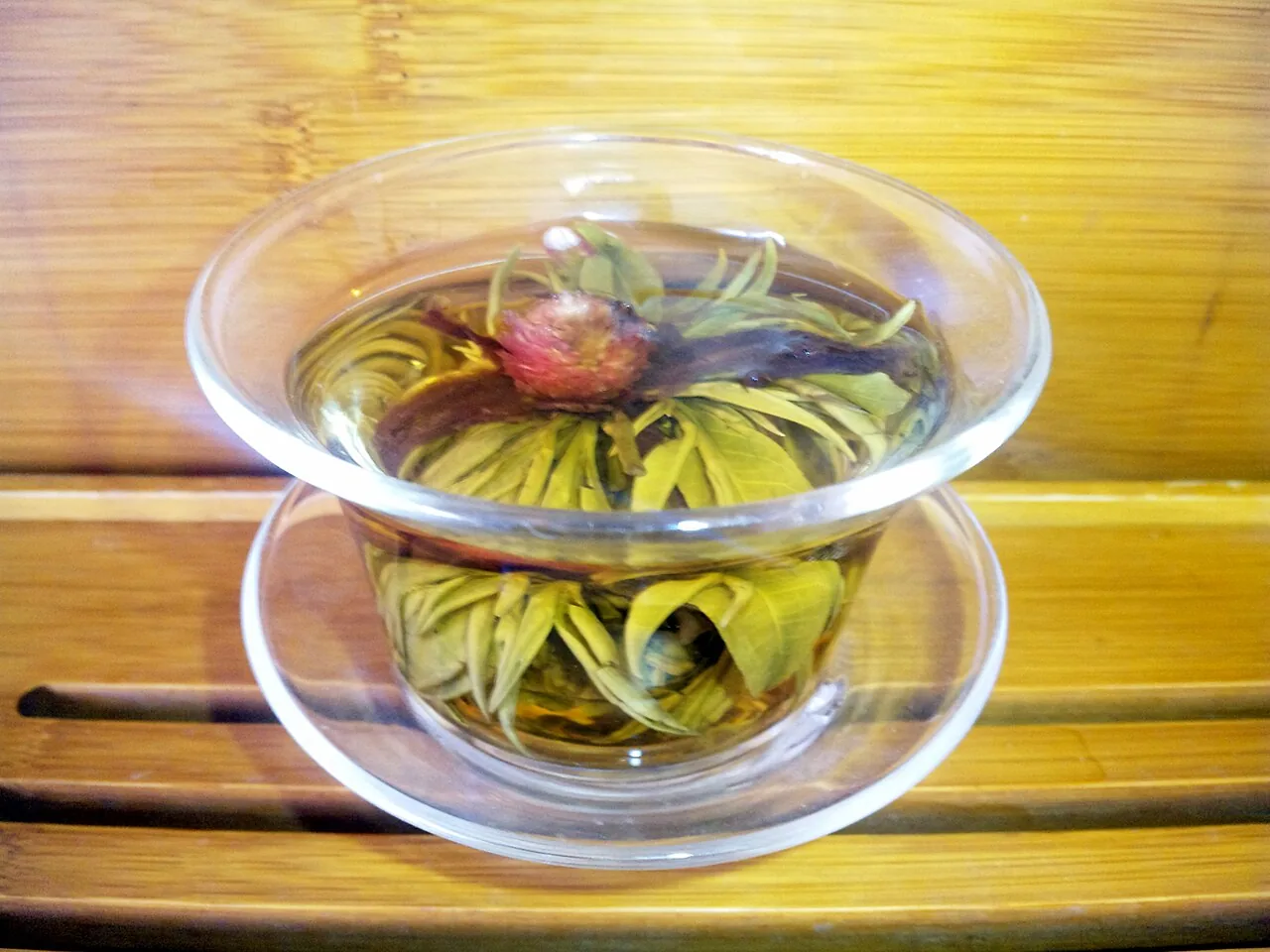
The core process of Tea Brewing balances precision with intuition, adapting to the specific qualities of each tea leaf. The practitioner begins by warming the vessel — a gaiwan, Yixing teapot, or simple glass cup — then rinses the leaves with hot water to "awaken" them. The first infusion is brief, often just seconds long, and may be discarded or savored as a palate cleanser. Each subsequent infusion extends slightly, coaxing different aromatic notes and flavor compounds from the leaves in successive waves. Water temperature is calibrated to the tea type: delicate green teas demand water around 75-80°C, while aged pu'er and oolong teas can meet near-boiling water. The entire process is an ongoing act of attention — observing the unfurling leaves, inhaling the evolving fragrance, and timing each steep by instinct as much as by clock.

The effects of mindful Tea Brewing extend far beyond the beverage itself. On a sensory level, it trains the palate to discern subtle flavor notes — floral, vegetal, mineral, roasted — and cultivates a refined appreciation for the natural world expressed through the leaf. On a mental level, the focused sequence of warming, rinsing, steeping, and pouring creates a structured rhythm that quiets the racing mind and anchors attention in the present moment. The practice fosters patience, as the finest brews emerge only through multiple infusions across an extended session; there is no rushing tea. Socially, Tea Brewing becomes a medium of connection — a shared pot of tea slows conversation, deepens listening, and creates a space of unhurried conviviality that is increasingly rare in modern life.

Tea Brewing exists in rich dialogue with many of the practices and arts represented across The Way of Nature Atlas. It shares with Calligraphy a reverence for the quality of a single, intentional gesture; with Porcelain a deep appreciation for the vessels that shape the sensory experience; and with Tai Chi a practice of relaxed, focused attention applied to a repeating cycle of movement. The practice originates from the Jiangnan region, whose mist-laden hills and hand-crafted ceramics inform every aspect of the brewing tradition. As a variant practice, it flows naturally into the more formal Tea Ceremony (茶道), where the same fundamental techniques are elevated into a structured spiritual discipline, and it connects directly to Lu Yu's Classic of Tea, the foundational text that first articulated tea as both art and Way.

In The Way of Nature Atlas, Tea Brewing is positioned as the most accessible entry point into the world of tea as mindful practice — the everyday ritual that anyone can adopt, anywhere, with nothing more than hot water and leaves. It bridges the material and the meditative, demonstrating that the Way need not be sought in distant temples but can be found in the steam rising from a cup of freshly brewed tea. For atlas users, exploring Tea Brewing is an invitation to discover how something as ordinary as making a cup of tea can become a complete practice of presence — one that engages all the senses, connects to generations of tradition, and returns us, again and again, to the simple, inexhaustible richness of this moment.
Relationship Network

How Tea Brewing connects

Each relationship represents a meaningful semantic link between Tea Brewing and other entities in the Atlas knowledge graph.

Entity Constellation

Entities connected to Tea Brewing

These entities share semantic relationships with Tea Brewing in the Atlas knowledge graph.

Tea

Ingredient L1

Tea (茶) is an aromatic beverage made from the leaves of Camellia sinensis, originating in China over 4,000 years ago and ...

Tea Ceremony

Practice L1

Tea Ceremony (茶道, chá dào — "Way of Tea") is the formal, ritualized practice of preparing and presenting tea as a spirit ...

The Classic Of Tea

Artifact L1

The Classic of Tea (茶经, chá jīng) is the world's first comprehensive treatise on tea, authored by the Tang dynasty schol ...

Harmony

和谐
Concept L1

Harmony (héxié) is a core value in Chinese philosophy, representing balance, coherence, and peaceful coexistence between ...

Calligraphy

Practice L1

书法 (Shūfǎ) is the art of expressive brush writing that embodies China's philosophical and aesthetic traditions. Combinin ...

Lu Yu

陆羽
Person L1

Lu Yu (陆羽, Lù Yǔ, 733-804 CE) was a Chinese tea scholar, writer, and cultural figure of the Tang dynasty, universally re ...

Porcelain

Artifact L1

Porcelain (瓷器, cíqì) is a ceramic material made by heating kaolin clay and other materials in a kiln at temperatures exc ...

Jiangnan

江南
Place L1

Jiangnan (江南, literally 'south of the Yangtze') is a culturally and historically rich region in southeastern China, enco ...

Green Tea

Ingredient L1

Green tea (绿茶, lǜchá) is an unoxidized tea made from the leaves of Camellia sinensis. The leaves are harvested, quickly ...

Black Tea

Ingredient L1

Black tea (红茶, hóngchá, 'red tea') is a fully oxidized tea made from leaves of Camellia sinensis. Its characteristic dar ...

Naming

Also known as

pao cha (synonym) pào chá (synonym) Tea Preparation (synonym) Gongfu Brewing (synonym) Chinese Tea Brewing (synonym) Leaf Brewing (synonym) Mindful Tea (synonym)
Atlas Role

Tea Brewing in the Atlas

What this entity provides

Tea Brewing (泡茶) is the Atlas's everyday practice of mindful tea preparation—the accessible, domestic cousin of the formal Tea Ceremony. Rooted in the principles codified by Lu Yu's Classic of Tea, it transforms a daily beverage into a practice of presence, patience, and sensory refinement. Tea Brewing connects Practice to Person (lu-yu), Place (Jiangnan), Artifact (porcelain teaware, bamboo utensils), and Ingredient (green-tea, black-tea, tea).

What it does NOT duplicate
  • tea-ceremony (茶道)—which is the formal, ritualized practice; tea-brewing is the everyday form
  • tea (茶)—which is the ingredient, not the practice of preparing it
Subsite References
tea-culture

Tea Brewing is the most widely practiced Chinese tea tradition—from gongfu cha in Chaoshan to casual brewing at every kitchen table.

dao-of-seasons

Water temperature, steeping time, and tea selection all shift with the seasons—cool green teas in summer, warming black teas in winter.

taichi-institute

The precise, unhurried movements of gongfu brewing mirror the body-awareness cultivated in tai chi.

Sources & References

References for Tea Brewing

Visual Gallery

Tea Brewing in imagery

Tea Brewing — visual reference
Watch

See Tea Brewing in motion

Mattias Pilhede · 813K views · YouTube ↗

Mei Leaf · 388K views · YouTube ↗

Owner Site

The Way of Nature Atlas

Central Atlas — provides Overview pages for all entities. Does not produce original entity content, only aggregates and references.

ConceptCraftMountainRiverFestival