Porcelain (瓷器, cíqì) is a ceramic material made by heating kaolin clay and other materials in a kiln at temperatures exceeding 1,200°C, producing a hard, white, translucent, and vitrified body
Porcelain (瓷器, cíqì) is a ceramic material made by heating kaolin clay and other materials in a kiln at temperatures exceeding 1,200°C, producing a hard, white, translucent, and vitrified body. Porcelain was first developed in China during the Eastern Han dynasty (25-220 CE) and perfected during the Tang (618-907) and Song (960-1279) dynasties. It differs from stoneware and earthenware in its whiteness, translucency when thin, and its characteristic resonant ring when tapped. The finest porcelain is so vitrified that it is non-porous even without glaze.
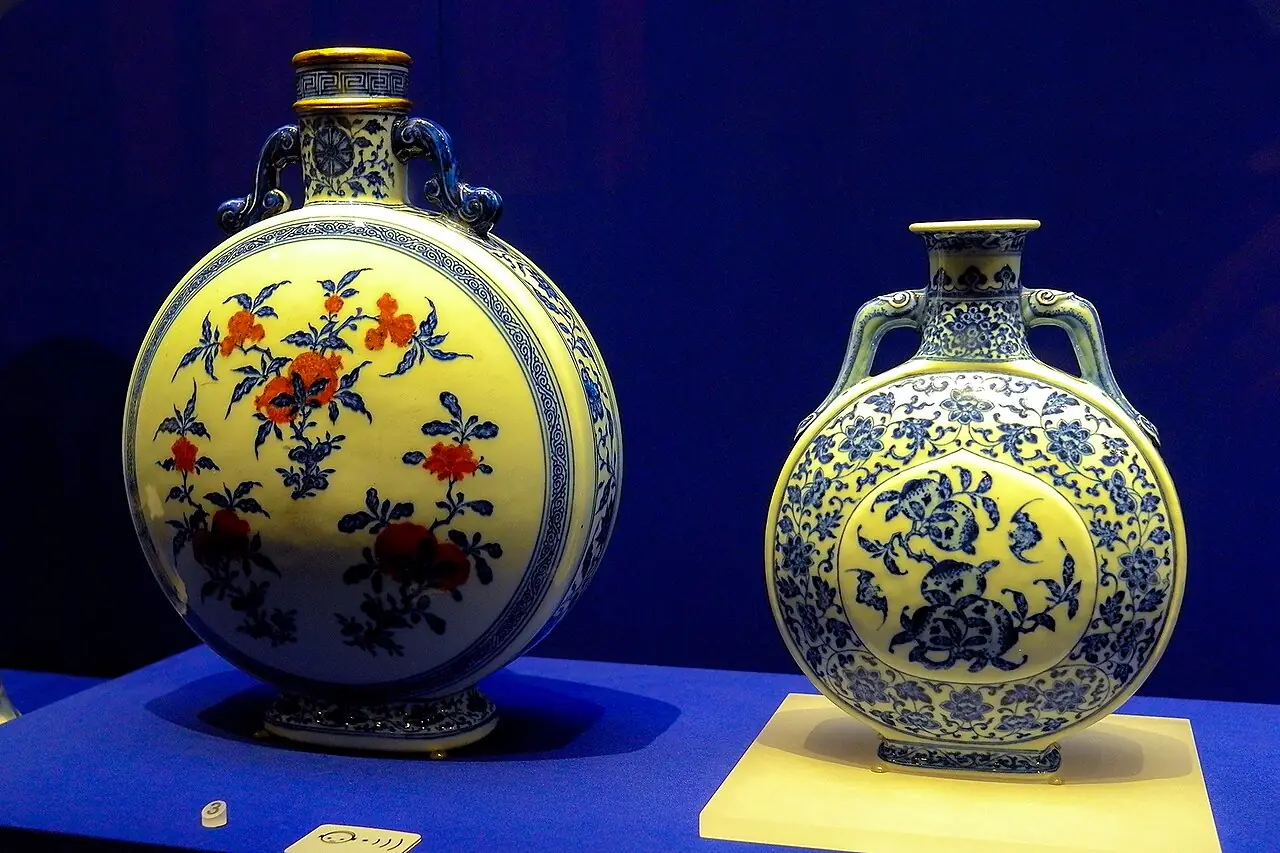
The production of porcelain involves several precise stages: clay preparation (including aging and kneading), shaping (by wheel-throwing, molding, or hand-building), drying, bisque firing, glazing, and a final high-temperature firing. The iconic blue-and-white porcelain of the Yuan and Ming dynasties uses cobalt oxide pigment applied under a transparent glaze—the blue blooming during the firing as the cobalt interacts with the glaze chemistry. Porcelain has been central to East Asian daily life as tableware, teaware, and decorative art. Porcelain teaware (such as gaiwan and teapots) is essential for tea (tea) brewing, as the material's non-porous surface preserves the pure flavor of the infusion without interference.
Porcelain's cultural significance extends far beyond its utility. It became China's first global luxury export, giving it the name it still carries in English—"china." The Silk Road, and later maritime trade routes, carried porcelain to the Middle East, Africa, and Europe, where it sparked centuries of imitation and innovation. In the scholar's studio, fine porcelain served as brush rests, water droppers, and seal boxes. The smooth white surface of porcelain also became a canvas for calligraphy (calligraphy)—many of the most celebrated ceramic works bear poetic inscriptions. Porcelain embodies the Daoist ideals of refinement through fire, transformation of humble earth into objects of transcendent beauty, and the harmony (harmony) between utility and art.
---
---
Each relationship represents a meaningful semantic link between Porcelain and other entities in the Atlas knowledge graph.
These entities share semantic relationships with Porcelain in the Atlas knowledge graph.
Tea Ceremony (茶道, chá dào — "Way of Tea") is the formal, ritualized practice of preparing and presenting tea as a spirit ...
Tea (茶) is an aromatic beverage made from the leaves of Camellia sinensis, originating in China over 4,000 years ago and ...
Soy sauce (酱油) is a dark, salty liquid condiment made from fermented soybeans, roasted wheat, brine, and Aspergillus mol ...
Jiangnan (江南, literally 'south of the Yangtze') is a culturally and historically rich region in southeastern China, enco ...
书法 (Shūfǎ) is the art of expressive brush writing that embodies China's philosophical and aesthetic traditions. Combinin ...
气功 (Qìgōng) is a system of breath, movement, and meditation practices for cultivating qi (vital energy). Originating in ...
The Spring Festival, also known as Chinese New Year, is the most important traditional festival in Chinese culture. It m ...
Yunnan (云南, Yúnnán, 'south of the clouds') is a province in southwestern China renowned for its extraordinary biodiversi ...
Silk Reeling (缠丝劲, chán sī jìn) is a fundamental internal movement practice within Chen-style Tai Chi, characterized by ...
Lotus (莲花) is an aquatic perennial plant of the genus Nelumbo, native to Asia and Australia, revered in Buddhism and Hin ...
Cicada (蝉, chán) is an insect of the order Hemiptera, infraorder Cicadomorpha, known for the loud, distinctive mating ca ...
Tea Brewing (泡茶, pào chá) is the everyday art and practice of preparing and serving tea with mindful attention. Rooted i ...
Ritual (仪式, yíshì) refers to formalized patterns of conduct that connect human life to cosmic and social order. Through ...
Sichuan (四川, Sìchuān) is a province in southwestern China, renowned for its dramatic topography encompassing the Sichuan ...
The panda (熊猫, xióng māo) is an iconic species native to the bamboo forests of Sichuan, Yunnan, and the Yangtze River ba ...
Silk (丝绸, sīchóu) is a natural protein fiber produced by the silkworm (silkworm) (Bombyx mori) as it forms its cocoon
Rice (米/稻) is the seed of Oryza sativa, a cereal grain that is the staple food for more than half the global population, ...
Pine (松树) is a genus of coniferous evergreen trees in the family Pinaceae, widely distributed across the Northern Hemisp ...
Jade (玉, yù) refers to two distinct metamorphic rocks treasured in East Asian culture: nephrite, a calcium magnesium sil ...
Porcelain (瓷器) is the Atlas's globally transformative artifact—China's first luxury export that gave English its name for the country itself. Born from kaolin clay fired at 1,200°C, porcelain embodies the Daoist principle of transformation through fire: humble earth refined into translucent beauty. Blue-and-white porcelain, celadon, and tea wares connect Artifact to Practice (tea-brewing, calligraphy), Place (Jiangnan kilns, Silk Road trade), and Ingredient (tea).
Porcelain gaiwan and teapots are essential to tea brewing—the non-porous surface preserves pure tea flavor.
Porcelain was China's first global luxury good, transmitted along the Silk Road and maritime trade routes.
Each kiln firing follows seasonal humidity and temperature patterns—porcelain was traditionally fired in specific seasons.
Kelly Xiao · 408K views · YouTube ↗
Little Chinese Everywhere · 107K views · YouTube ↗
Central Atlas — provides Overview pages for all entities. Does not produce original entity content, only aggregates and references.
Owner since 2026-01-01