Entity Profile
Silk
Silk (丝绸, sīchóu) is a natural protein fiber produced by the silkworm (silkworm) (Bombyx mori) as it forms its cocoon
Artifact
primary type
Level 1
Concrete entity
16
relationships mapped
Silk (丝绸, sīchóu) is a natural protein fiber produced by the silkworm (silkworm) (Bombyx mori) as it forms its cocoon
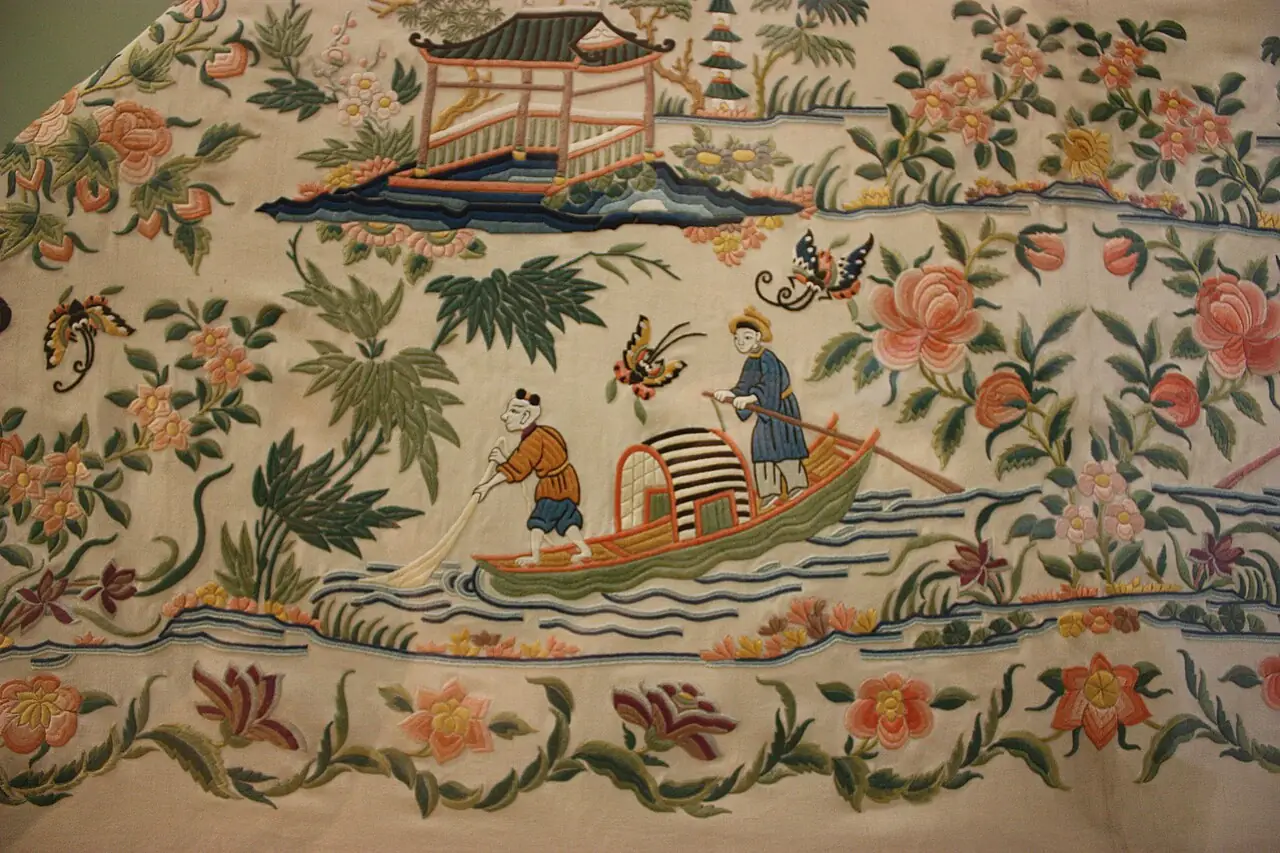
Silk (丝绸, sīchóu) is a natural protein fiber produced by the silkworm (silkworm) (Bombyx mori) as it forms its cocoon. Each cocoon yields a single continuous filament of fibroin protein, coated with sericin gum, typically 500-1,500 meters in length. The production of silk—sericulture—involves raising silkworms through their larval stage as they feed on mulberry (mulberry) leaves, then collecting the cocoons before the moth emerges, and carefully unwinding the filament through a process called reeling. Multiple filaments are twisted together to form a thread strong enough for weaving.
The historical importance of silk in East Asia can hardly be overstated. Archaeological evidence places sericulture in China's Yangtze River valley as early as the 4th millennium BCE, with a fragment of woven silk from Zhejiang dating to approximately 3,630 BCE. By the Han dynasty (206 BCE - 220 CE), silk production was a state-controlled industry, and the Silk Road—a network of trade routes spanning over 6,000 kilometers—took its name from this prized fabric. Regions like Jiangnan (jiangnan) and Sichuan (sichuan) became renowned silk-producing centers, each developing distinctive weaving traditions: Suzhou's delicate brocades, Sichuan's Shu brocade, and Hangzhou's smooth satins.
Silk is more than a textile; it is a cultural medium. Silk scrolls carried the finest calligraphy (calligraphy) and painting, their absorbent surface demanding mastery of brush and ink. Silk robes signified imperial authority and social status—certain colors and patterns were reserved exclusively for the emperor. The art of silk weaving itself embodies harmony (harmony)—the interplay of warp and weft, the balance of pattern and ground, the tension between strength and delicacy. On the global stage, silk was the first product to make China known to the world, a fact reflected in the relationship between silk and porcelain (porcelain)—both were carried along the same trade routes, both shaped global tastes, and both remain enduring symbols of East Asian craftsmanship. Tea (tea), too, followed the silk routes, creating a triangular cultural exchange of China's three great gifts to the world.
---
---
Each relationship represents a meaningful semantic link between Silk and other entities in the Atlas knowledge graph.
Bamboo baskets used in silk production (silkworm baskets)
View Bamboo Basket →Silk scrolls for calligraphy art
View Calligraphy →Silk weaving embodies harmony of threads
View Harmony →Jade and silk were both traded on the Silk Road
View Jade →Jiangnan is a historic silk-producing region
View Jiangnan →Silk Road connected to Mount Tai region
View Mount Tai →Mulberry leaves feed silkworms for silk production
View Mulberry →Silk Production — indirect via silkworm
View Mulberry →Silk and porcelain trade routes
View Porcelain →Sichuan is a historic silk region (Shu brocade)
View Sichuan →Silk is produced by silkworms
View Silkworm →Silk garments worn during New Year celebrations
View Spring Festival →Silk Road tea trade
View Tea →Tofu texture compared to silk in culinary writing
View Tofu →These entities share semantic relationships with Silk in the Atlas knowledge graph.
The Spring Festival, also known as Chinese New Year, is the most important traditional festival in Chinese culture. It m ...
Silkworm (蚕, cán) is the larva (caterpillar) of the domestic silkmoth (Bombyx mori), an insect of the family Bombycidae
Mulberry (桑树) is a genus of deciduous trees in the family Moraceae, native to warm temperate and subtropical regions of ...
Jiangnan (江南, literally 'south of the Yangtze') is a culturally and historically rich region in southeastern China, enco ...
Sichuan (四川, Sìchuān) is a province in southwestern China, renowned for its dramatic topography encompassing the Sichuan ...
书法 (Shūfǎ) is the art of expressive brush writing that embodies China's philosophical and aesthetic traditions. Combinin ...
Porcelain (瓷器, cíqì) is a ceramic material made by heating kaolin clay and other materials in a kiln at temperatures exc ...
Tea (茶) is an aromatic beverage made from the leaves of Camellia sinensis, originating in China over 4,000 years ago and ...
Harmony (héxié) is a core value in Chinese philosophy, representing balance, coherence, and peaceful coexistence between ...
Mount Tai (泰山, Tai Shan) is one of the Five Great Mountains (五岳, Wuyue) of China, located in Shandong Province. Rising t ...
Bamboo Basket (竹篮, zhú lán) is a container woven from strips split from bamboo culms.
Tofu (豆腐) is a food prepared by coagulating soy milk and pressing the resulting curds into soft blocks, a staple source ...
Jade (玉, yù) refers to two distinct metamorphic rocks treasured in East Asian culture: nephrite, a calcium magnesium sil ...
Silk (丝绸) is the Atlas's globally transformative textile—a protein fiber produced by silkworms raised on mulberry leaves, creating one of history's most tightly coupled species relationships. The Silk Road, named for this fabric, connected China to the Mediterranean for over 1,500 years. Silk connects Artifact to Animal (silkworm), Plant (mulberry), Place (Jiangnan, Sichuan), Practice (calligraphy on silk scrolls), and Concept (harmony—the interplay of warp and weft as balance).
Silk production (sericulture) has shaped Chinese civilization for 5,000 years—its secrets guarded for millennia.
Silkworm rearing cycles follow the mulberry leaf growth season—first batch after Spring Festival, second after Summer Solstice.
The silk trade carried not just fabric but also tea, porcelain, and spices—the umami ingredients of global cuisine.
https://www.britannica.com/topic/silk
https://ich.unesco.org/en/RL/sericulture-and-silk-craftsmanship-of-china-00204
https://www.chinasilkmuseum.com/
李子柒 Liziqi · 32.5M views · YouTube ↗
Lumi Farm · 1.6M views · YouTube ↗
Culinary science, seasonal eating, and ingredient knowledge. Owner of food-related entities and tea.
Owner since 2026-01-01