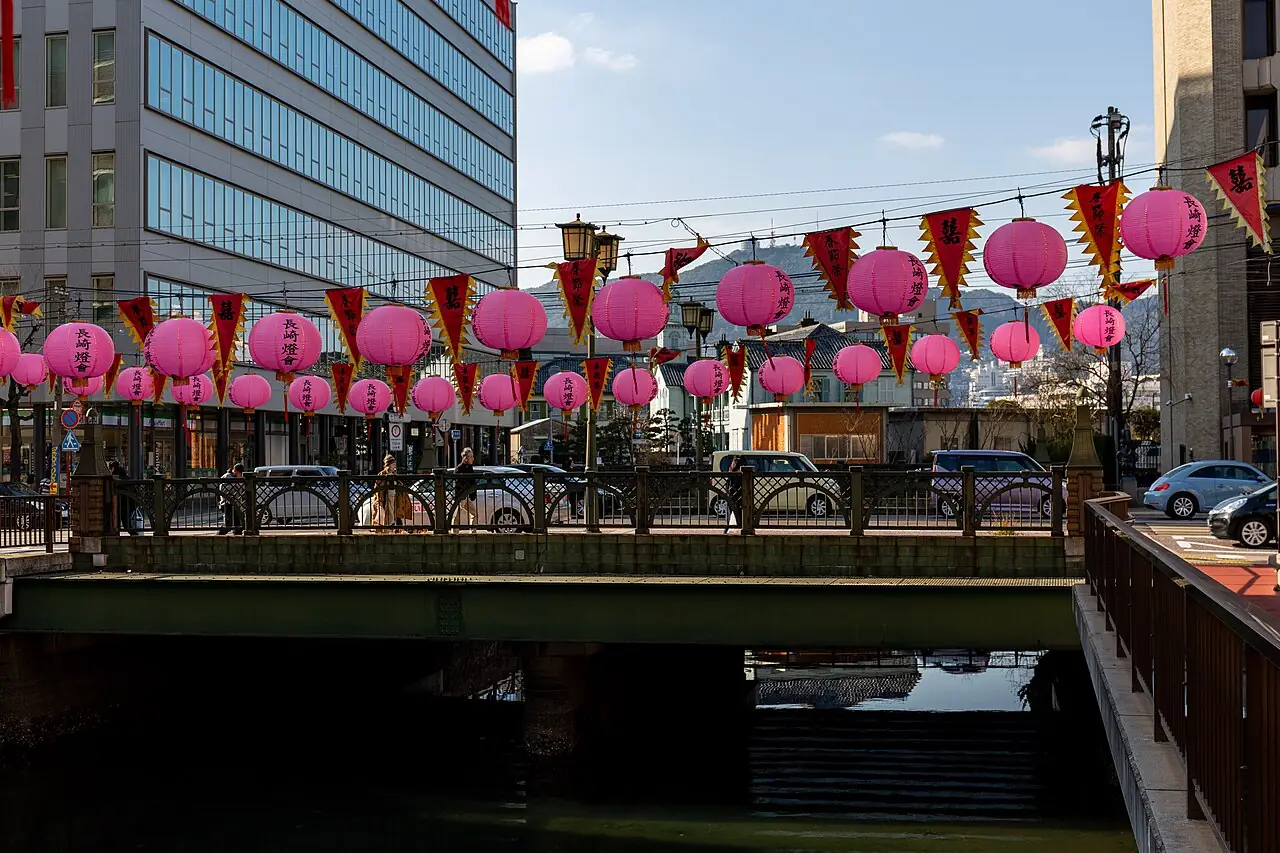
The Spring Festival (春节, Chūnjié), also known as Chinese New Year or Lunar New Year, is the observance that marks the first day of the first month of the Chinese lunisolar calendar. It lasts fifteen days and closes with the Lantern Festival (元宵节, Yuánxiāo Jié). Three distinct histories are often compressed into the single word "ancient", and the Atlas keeps them apart. The year-end and new-year practices themselves are old: agrarian communities held end-of-harvest sacrifices to deities and ancestors long before the present calendar, and early literature records household purification and the driving away of harmful influences at the turn of the year. The word 春节 is a separate matter. It was applied to other seasonal occasions in earlier writing, and it became the standard name for the lunar new year only in the modern period, when calendar reform assigned the term to the new year and the designation was settled in national law. To describe the custom as three thousand years old is defensible; to describe the name as equally old is not. The Festival is also formally recognised: in 2024 the Spring Festival was inscribed on the UNESCO Representative List of the Intangible Cultural Heritage of Humanity, which recognises the social practices of the holiday and their transmission. It does not certify the origin of any individual custom within it.
The Festival belongs to a lunisolar calendar, and that calendar is not the same system as the twenty-four solar terms, although the two are often discussed together. A solar term is fixed by the Sun's position along the ecliptic: the winter solstice (冬至, Dōngzhì), for instance, is the moment of greatest southern declination and the shortest northern day, and it is the same moment every year. The new year instead depends on the new moon, so it moves through the Gregorian year and may fall as early as 21 January or as late as 20 February. Because it arrives in late January or early February, the new year consistently falls near the solar term Start of Spring (立春, Lìchūn) rather than on it, and the Atlas records that proximity as a relationship rather than as an astronomical identity. The two systems meet in ordinary life — the Festival sits inside the solar year's run of terms — but they measure time differently and neither explains the other. The Twenty-Four Solar Terms as a whole were inscribed on the same UNESCO Representative List in 2016; the winter solstice is one of the twenty-four, and is not itself a separately inscribed element.
Food carries much of the Festival's meaning, and the Atlas treats it as one cultural practice among others rather than a universal rule. Dumplings (饺子, jiǎozi) are prepared and shared at the new year in many families, and in some regions they are also eaten at the winter solstice. Practice varies: not every household makes them at the new year, and the forms differ by region, with filled breads, glutinous-rice foods and sweet treats standing in their place elsewhere. Their shape is also read symbolically. Dumplings made in the folded style of a Chinese silver ingot (元宝, yuánbǎo) are commonly taken to stand for wealth, and dishes whose names sound auspicious are served for the same reason — rice cakes (年糕, niángāo) for rising higher from year to year, whole fish (鱼, yú) for having a surplus. That symbolic reading is a widespread folk explanation. Its date of origin, its former prevalence, and the separate claim that the character 饺 developed from an older word for coin delivery are distinct questions that the Atlas does not treat as settled. Recipes, fillings and technique belong to the craft of cooking rather than to a record of the Festival.
The Festival is carried by collective rather than individual action. Families gather for a reunion dinner on New Year's Eve (年夜饭, niányèfàn), red envelopes (红包, hóngbāo) carrying money are given, and households clean and decorate before the first day. These acts bind several generations at once: the work of preparation is shared, the meal is eaten together, and elders and younger children occupy particular places within it. Where family members live apart, the reunion may be distributed across journeys and screen connections rather than gathered in one house, which is a present-day form of the same practice. Harmony (和谐, héxié) is the value the Festival is commonly said to express, in the family and in relations between people and the world more broadly, and disputes are commonly settled before the year turns.
A story sits alongside these practices without standing behind them. The most widely circulated account tells of a beast called Nian (年) that came each year to terrorise villages until people found that red colour, bright light and loud noise drove it away, which is why firecrackers, lanterns and red decoration are used. This is a folk narrative used to explain and pass on celebrations, and it should not be read as the documented cause of those customs. Firecrackers and the household purification that goes with them are recorded in early literature for their own sake, long before the story is traceable, and they belong to a wider set of end-of-year practices of warding off harmful influences rather than to a response to any one creature. The earliest written trace of the Nian story located so far dates from 1933, which is the beginning of its documentary trail and not a date of origin: earlier versions may exist, and the story's spread, its printed forms and its place in family storytelling are matters of evidence in their own right.
None of this is fixed. Customs differ between regions, between urban and rural households, and between families, and the Atlas records regional variation rather than a single national pattern. Practices also change across generations and with migration, travel and work: what a family prepared at the new year depends on who is present, what can be bought, and how much time there is. Traditions survive by being repeated and taught — through watching, helping, being told why a thing is done, and doing it again the following year — rather than by remaining unchanged. Some customs are shed, some are adapted, and some persist in households that have no particular reason for them beyond the habit itself.
In the Atlas the Spring Festival is the anchor Festival entity for this part of the cultural calendar, and it is connected rather than self-contained. Its recorded relationships run to Start of Spring on the seasonal side, and to the material culture of the holiday — the calligraphy of spring couplets, the porcelain laid for the reunion table, the silk worn for the occasion, and rice as the base of its staple foods — and to harmony as a principle. Those connections are navigable knowledge, and each is a starting point rather than an endpoint. Foods such as dumplings and narratives such as the Nian beast are related cultural objects; they are referred to here without being registry entities in their own right, because what they explain is better held by the records that concern seasonal timing, cooking practice, transmission, and storytelling.