Rice (米/稻) is the seed of Oryza sativa, a cereal grain that is the staple food for more than half the global population, with East Asia being both its center of origin and its most culturally significant region.
Rice (米, mǐ) is the seed of the grass species Oryza sativa (Asian rice), a cereal grain that serves as the primary caloric staple for over 3.5 billion people worldwide. East Asia is the center of origin for domesticated rice, with the earliest archaeological evidence of rice cultivation dating to 8000-6000 BCE in the Yangtze River valley of China. Two major subspecies of Asian rice are recognized: japonica, a short-grain sticky rice dominant in Japan, Korea, and northern China; and indica, a long-grain non-sticky rice dominant in southern China and Southeast Asia.
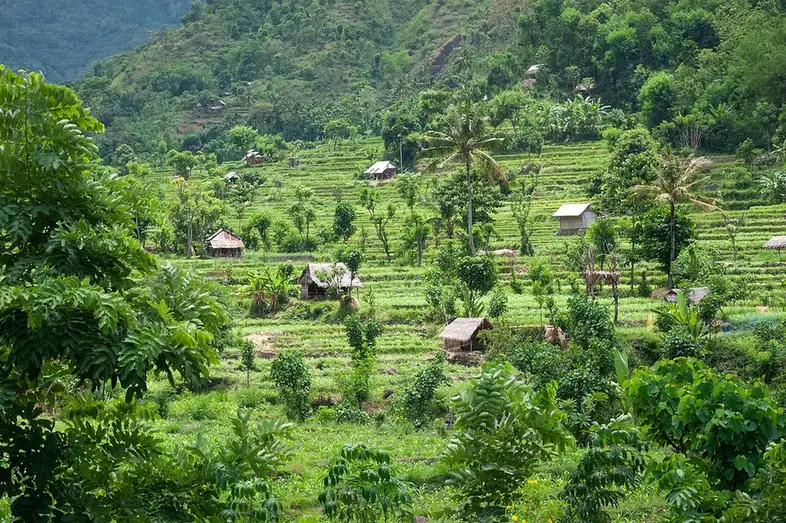
Rice cultivation is inextricably linked to East Asian geography and ecology. Paddy rice (wetland rice grown in flooded fields) is the dominant cultivation method, requiring flat, irrigable land with access to abundant water. The flooded paddy creates a unique artificial wetland ecosystem, providing habitat for fish, frogs, and migratory birds, while the anaerobic conditions improve soil fertility through biological nitrogen fixation. In terraced landscapes—most famously the Longji Rice Terraces of Guangxi and the Banaue Terraces of the Philippines—rice farming has literally shaped mountains into habitable landscapes over centuries.
In East Asian culture, rice holds a position unmatched by any other food. The Chinese word for rice (米, mǐ) is synonymous with food itself. The greeting "Have you eaten rice?" (吃饭了吗, chīfàn le ma) is a standard Chinese salutation. Rice is central to religious rituals—offered to ancestors at household altars, thrown at weddings, and used in Buddhist temple ceremonies. In Japan, the emperor traditionally performs the first rice planting of the season at the imperial palace grounds in a Shinto ritual. The Japanese word for cooked rice (ご飯, gohan) also means "meal," indicating rice's fundamental role in defining what constitutes food.
The culinary applications of rice in East Asian cuisine are extraordinarily diverse. Short-grain rice is used for sushi (in Japan), where its slight stickiness when seasoned with vinegar-sugar-salt mixture makes it ideal for hand-forming. Medium-grain rice is the daily staple across most of China. Rice is also processed into rice wine (including sake in Japan and huangjiu, 黄酒, in China), rice vinegar (米醋, mǐcù), rice flour for noodles and dumplings, rice cakes (年糕, niángāo for Lunar New Year), and rice paper for spring rolls. In traditional Chinese medicine, different rice preparations are recommended for different conditions—rice congee (粥, zhōu) is the classic restorative food for illness and recovery. The cooking water (rice water) is used as a skincare rinse and treatment for digestive complaints.
Each relationship represents a meaningful semantic link between Rice and other entities in the Atlas knowledge graph.
These 24 solar terms mark when Rice appears, peaks, or transforms through the seasons.
Solar term #6 · Apr 19-21 · Earth
Planting preparation
View on Dao of Seasons ↗These entities share semantic relationships with Rice in the Atlas knowledge graph.
Tofu (豆腐) is a food prepared by coagulating soy milk and pressing the resulting curds into soft blocks, a staple source ...
Bamboo Basket (竹篮, zhú lán) is a woven container crafted from split bamboo strips, used across East Asia for thousands o ...
Shen Nong (神农, Shén Nóng, "Divine Farmer") is a legendary cultural hero and mythological emperor of ancient China, tradi ...
Porcelain (瓷器, cíqì) is a ceramic material made by heating kaolin clay and other materials in a kiln at temperatures exc ...
Mulberry (桑树) is a genus of deciduous trees in the family Moraceae, native to warm temperate and subtropical regions of ...
The panda (熊猫, xióng māo) is an iconic species native to the bamboo forests of Sichuan, Yunnan, and the Yangtze River ba ...
Lotus (莲花) is an aquatic perennial plant of the genus Nelumbo, native to Asia and Australia, revered in Buddhism and Hin ...
Ecological Intelligence (生态智慧) is the capacity to perceive, understand, and act in ways that align with the patterns and ...
The Spring Festival, also known as Chinese New Year, is the most important traditional festival in Chinese culture. It m ...
Natural Timing (自然时序) is the rhythm of seasons, the succession of natural events, and the wisdom of acting in accord wit ...
The Yangtze River (长江, Cháng Jiāng) is the longest river in Asia and the third-longest in the world, flowing 6,300 kilom ...
Sichuan pepper (花椒) is a spice made from the husks of prickly ash berries (Zanthoxylum genus), known for its unique numb ...
Sichuan (四川, Sìchuān) is a province in southwestern China, renowned for its dramatic topography encompassing the Sichuan ...
发酵 (Fājiào) is the microbial transformation of ingredients into preserved, flavour-rich foods central to Chinese cuisine ...
Soy sauce (酱油) is a dark, salty liquid condiment made from fermented soybeans, roasted wheat, brine, and Aspergillus mol ...
Lotus root (莲藕, lián'ǒu) is the edible rhizome of the lotus plant (Nelumbo nucifera), a perennial aquatic plant revered ...
Rice (米/稻) is the Atlas's foundational staple—the grain that feeds half the world and defines East Asian cuisine, agriculture, and culture. The Chinese word for rice (米) is synonymous with food itself, and the greeting 'Have you eaten rice?' is the standard salutation. Rice connects Ingredient to Place (Yangtze River valley, Jiangnan terraces), Practice (fermentation into wine and vinegar), and Concept (ritual—offered to ancestors, central to ceremonies).
Rice is the neutral canvas against which umami flavors shine—the blank page for soy sauce, fermented toppings, and savory broths.
Rice planting and harvest cycles define the East Asian agricultural calendar—transplanting after Start of Summer, harvest at Autumn Equinox.
The earliest domesticated rice (8000-6000 BCE) in the Yangtze River valley marks the beginning of Chinese civilization.
AllAboutDiscovery · 107K views · YouTube ↗
China Actual · 97K views · YouTube ↗
Central Atlas — provides Overview pages for all entities. Does not produce original entity content, only aggregates and references.
Owner since 2026-01-01