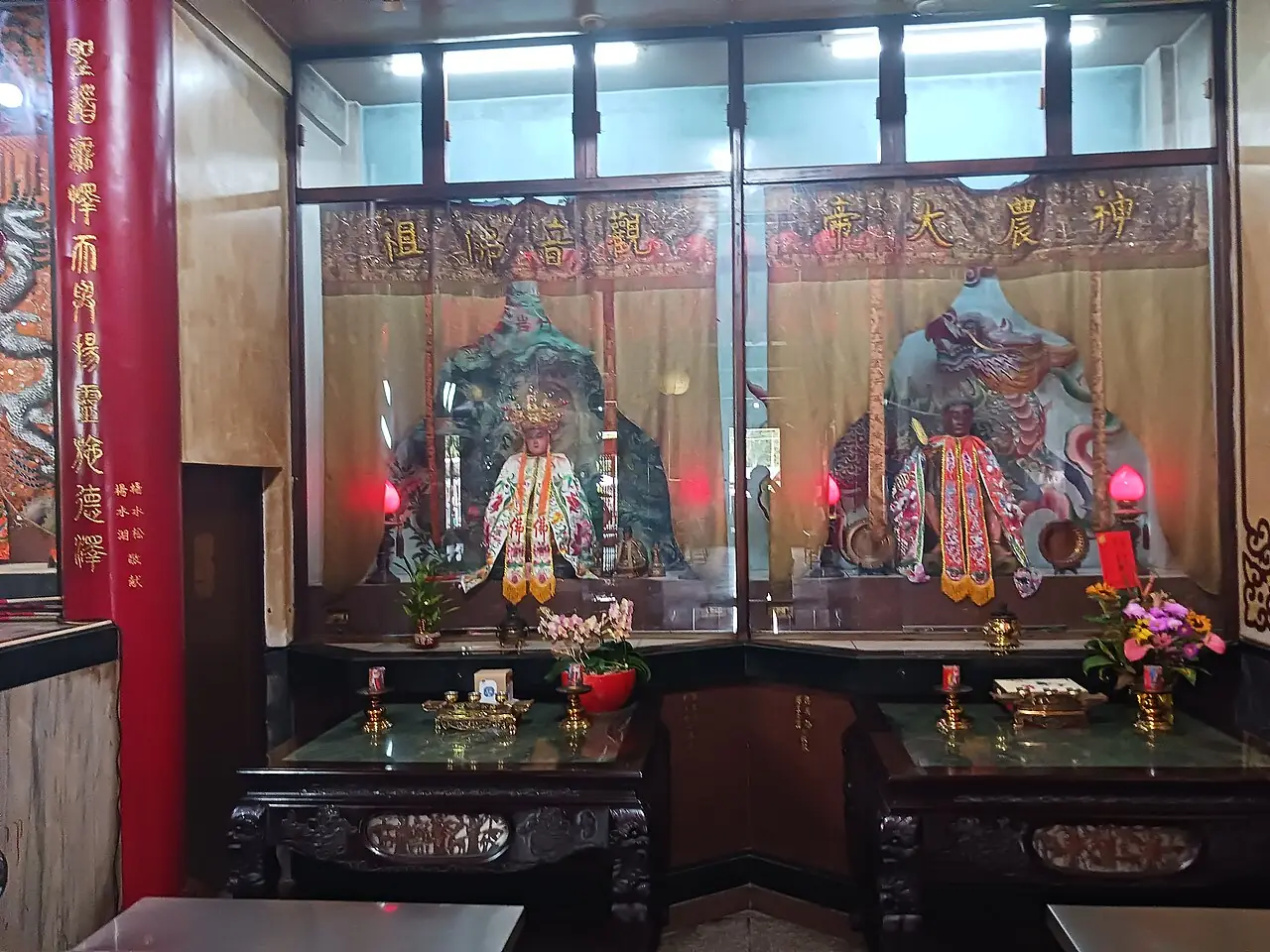
Shen Nong (神农, Shén Nóng, "Divine Farmer") is a legendary cultural hero and mythological emperor of ancient China, traditionally dated to around 2,800 BCE
Shen Nong (神农, Shén Nóng, "Divine Farmer") is a legendary cultural hero and mythological emperor of ancient China, traditionally dated to around 2,800 BCE. He is revered as the father of Chinese agriculture, herbal medicine, and tea culture. According to classical texts such as the Book of Documents and the Records of the Grand Historian, Shen Nong taught the Chinese people the arts of agriculture—plowing, sowing, and harvesting—transforming them from hunter-gatherers into settled farmers. He is credited with inventing the plow, introducing the cultivation of the principal grains, and establishing the practice of agricultural markets.
The foundational text attributed to Shen Nong is the Shen Nong Ben Cao Jing (神农本草经, "The Divine Farmer's Materia Medica"), the earliest Chinese pharmacopoeia, which categorizes 365 medicinal substances—including mulberry (mulberry), lotus (lotus), and other plants—into three grades according to their therapeutic properties and toxicity. Legend holds that Shen Nong personally tested herbs on himself, ingesting up to seventy poisons in a single day and using tea (tea) leaves as an antidote. This legendary act of self-experimentation identifies Shen Nong as the mythological discoverer of tea's medicinal properties, a story that continues to anchor tea culture in its healing origins.
Shen Nong's cultural significance extends into multiple domains of East Asian life. As the teacher of agriculture, he is associated with rice (rice) cultivation, establishing the foundation of East Asian food culture. His herbal knowledge connects him to fermentation (fermentation), which the early Chinese recognized as a transformative process in food preservation and medicine. In Daoist cosmology, Shen Nong represents humanity's harmonious relationship with nature—learning from plants, mastering fire, and developing civilization without losing connection to the natural world. He remains a tutelary figure for farmers, herbalists, and tea merchants, honored in temples and festivals across China. The legend of Shen Nong reminds us that the most profound discoveries come from patient observation of, and trust in, the natural world.
---
---
## Mineral (1)
---
Each relationship represents a meaningful semantic link between Shen Nong and other entities in the Atlas knowledge graph.
These entities share semantic relationships with Shen Nong in the Atlas knowledge graph.
Mulberry (桑树) is a genus of deciduous trees in the family Moraceae, native to warm temperate and subtropical regions of ...
发酵 (Fājiào) is the microbial transformation of ingredients into preserved, flavour-rich foods central to Chinese cuisine ...
Rice (米/稻) is the seed of Oryza sativa, a cereal grain that is the staple food for more than half the global population, ...
Lotus (莲花) is an aquatic perennial plant of the genus Nelumbo, native to Asia and Australia, revered in Buddhism and Hin ...
Tea (茶) is an aromatic beverage made from the leaves of Camellia sinensis, originating in China over 4,000 years ago and ...
Lu Yu (陆羽, Lù Yǔ, 733-804 CE) was a Chinese tea scholar, writer, and cultural figure of the Tang dynasty, universally re ...
Bamboo (竹子) is a fast-growing grass species in the subfamily Bambusoideae, native to East and Southeast Asia, valued for ...
Ink Stick (墨, mò) is a solid block of ink used in traditional East Asian calligraphy and brush painting
Shen Nong (神农, 'Divine Farmer') is the Atlas's mythological origin figure—the legendary emperor who discovered tea, taught agriculture, and tested hundreds of herbs on himself. He anchors the Person domain at the deepest historical layer (c. 2800 BCE), connecting to Ingredient (tea, rice—which he taught cultivation of), Practice (fermentation, herbal medicine), Artifact (ink-stick), and Concept (Daoist harmony with nature).
Shen Nong's legendary discovery of tea—leaves falling into boiling water—is the foundational myth of Chinese tea culture.
His self-experimentation with herbs established the tradition of food-as-medicine that underlies East Asian dietary philosophy.
As the teacher of agriculture, Shen Nong established the seasonal planting and harvest cycles that define the agricultural calendar.
Central Atlas — provides Overview pages for all entities. Does not produce original entity content, only aggregates and references.
Owner since 2026-01-01