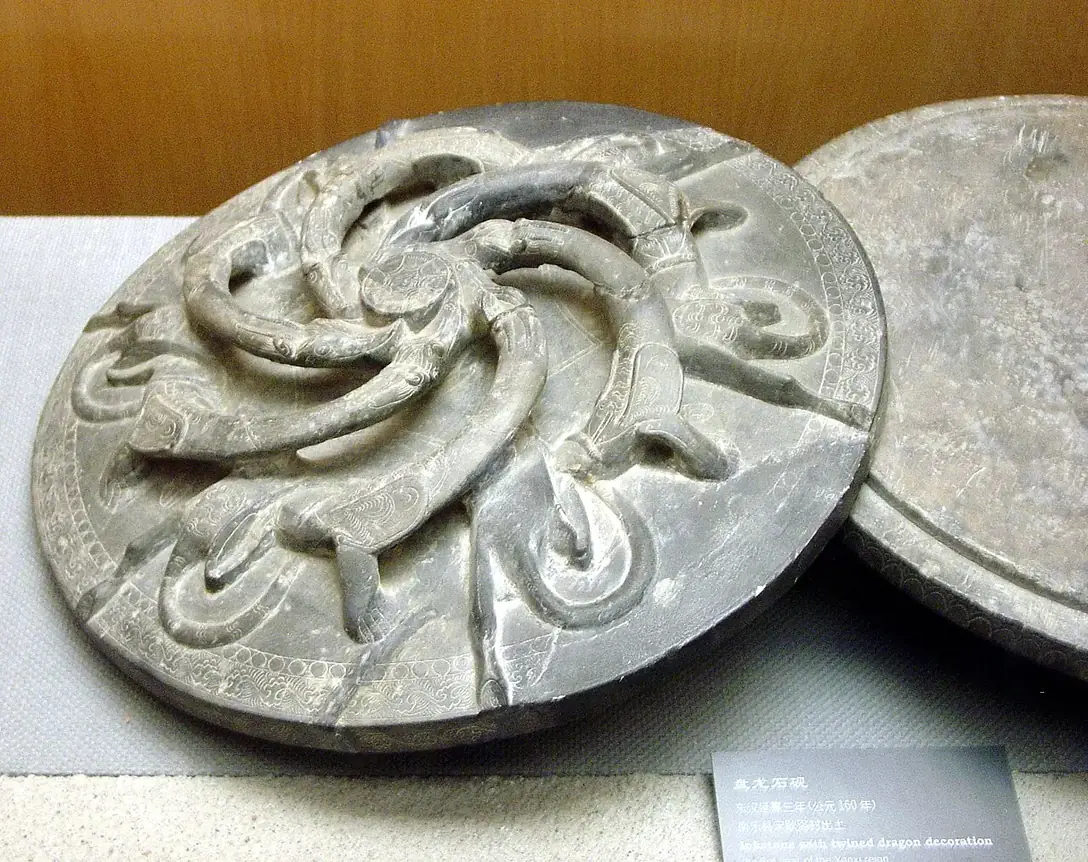
Entity Profile
Ink Stick
Ink Stick (墨, mò) is a solid block of ink used in traditional East Asian calligraphy and brush painting
Artifact
primary type
Level 1
Concrete entity
5
relationships mapped
Ink Stick (墨, mò) is a solid block of ink used in traditional East Asian calligraphy and brush painting
Ink Stick (墨, mò) is a solid block of ink used in traditional East Asian calligraphy and brush painting. An ink stick is composed of soot—typically from burnt pine (pine) resin or bamboo (bamboo)—bound with animal glue and pressed into a molded form, then aged for months or years. The highest-quality ink sticks incorporate aromatic ingredients such as musk, cloves, or camphor. An ink stick's quality is judged by its color depth, luster, smoothness of grinding, and permanence on paper.
The preparation of ink is itself a meditative practice central to calligraphy (calligraphy). The calligrapher pours a small amount of water onto the ink stone, then grinds the ink stick in a slow, circular motion until the liquid reaches the desired consistency—a process that can take ten to thirty minutes. This grinding ritual, known as "mo" (磨墨), is not merely preparatory but integral to the creative act: it calms the mind, centers the breath, and attunes the calligrapher to the work ahead. The ink stick's connection to bamboo (bamboo) runs deep—pine and bamboo soot provide the black pigment, and the slow, deliberate grinding embodies the ritual (ritual) quality of traditional practice.
In East Asian culture, the ink stick is one of the Four Treasures of the Study (文房四宝, wén fáng sì bǎo), alongside the brush, paper, and ink stone. It represents discipline, patience, and the cultivation of harmony (harmony)—the ink-grounding practice teaches that quality cannot be rushed, that preparation is as important as execution. The ink stick's origins trace to the Warring States period, with innovations attributed to the mythical emperor Shen Nong (shen-nong) and later refined by Tang dynasty artisans. Its fixed, solid form paradoxically contains infinite potential—in every ink stick lies every poem, every painting, every character that has ever been written.
---
---
Each relationship represents a meaningful semantic link between Ink Stick and other entities in the Atlas knowledge graph.
Ink made from soot of burnt bamboo
View Bamboo →Primary tool for calligraphy ink preparation
View Calligraphy →Ink-grounding practice cultivates patience and harmony
View Harmony →Ink preparation is a ritual practice
View Ritual →Ink origins traced to ancient Chinese invention
View Shen Nong →These entities share semantic relationships with Ink Stick in the Atlas knowledge graph.
书法 (Shūfǎ) is the art of expressive brush writing that embodies China's philosophical and aesthetic traditions. Combinin ...
Bamboo (竹子) is a fast-growing grass species in the subfamily Bambusoideae, native to East and Southeast Asia, valued for ...
Shen Nong (神农, Shén Nóng, "Divine Farmer") is a legendary cultural hero and mythological emperor of ancient China, tradi ...
Ritual (仪式, yíshì) refers to formalized patterns of conduct that connect human life to cosmic and social order. Through ...
Harmony (héxié) is a core value in Chinese philosophy, representing balance, coherence, and peaceful coexistence between ...
Ink Stick (墨) is the Atlas's artifact of concentrated potential—a solid block of pine-soot and glue that contains every possible poem, painting, and character. Its grinding ritual (磨墨) is a meditative preparation that attunes the calligrapher before a single stroke is made. The ink stick connects Artifact to Practice (calligraphy), Plant (pine, bamboo for soot), and Person (Shen Nong attributed with its origins).
As one of the Four Treasures of the Study, the ink stick represents the material foundation of China's literary and artistic civilization.
The slow, circular grinding motion mirrors the silk-reeling spiral—a centering practice before creative expression.
Ink stick aging—some premium sticks are aged for decades—embodies natural timing in material form.
https://www.britannica.com/art/ink-stick
https://www.dpm.org.cn/
https://www.metmuseum.org/toah/hd/inkc/hd_inkc.htm
Jazza · 2.5M views · YouTube ↗
Junko Azukawa · 62K views · YouTube ↗
Culinary science, seasonal eating, and ingredient knowledge. Owner of food-related entities and tea.
Owner since 2026-01-01