Lotus backdrop
Entity Profile

Lotus

Plant Level 1 — Concrete The Way of Nature Atlas ↗ #plant #aquatic #symbol #buddhism

Lotus (莲花) is an aquatic perennial plant of the genus Nelumbo, native to Asia and Australia, revered in Buddhism and Hinduism as a symbol of purity and spiritual awakening.

Plant
primary type
Level 1
Concrete entity
20
relationships mapped
Overview

About Lotus

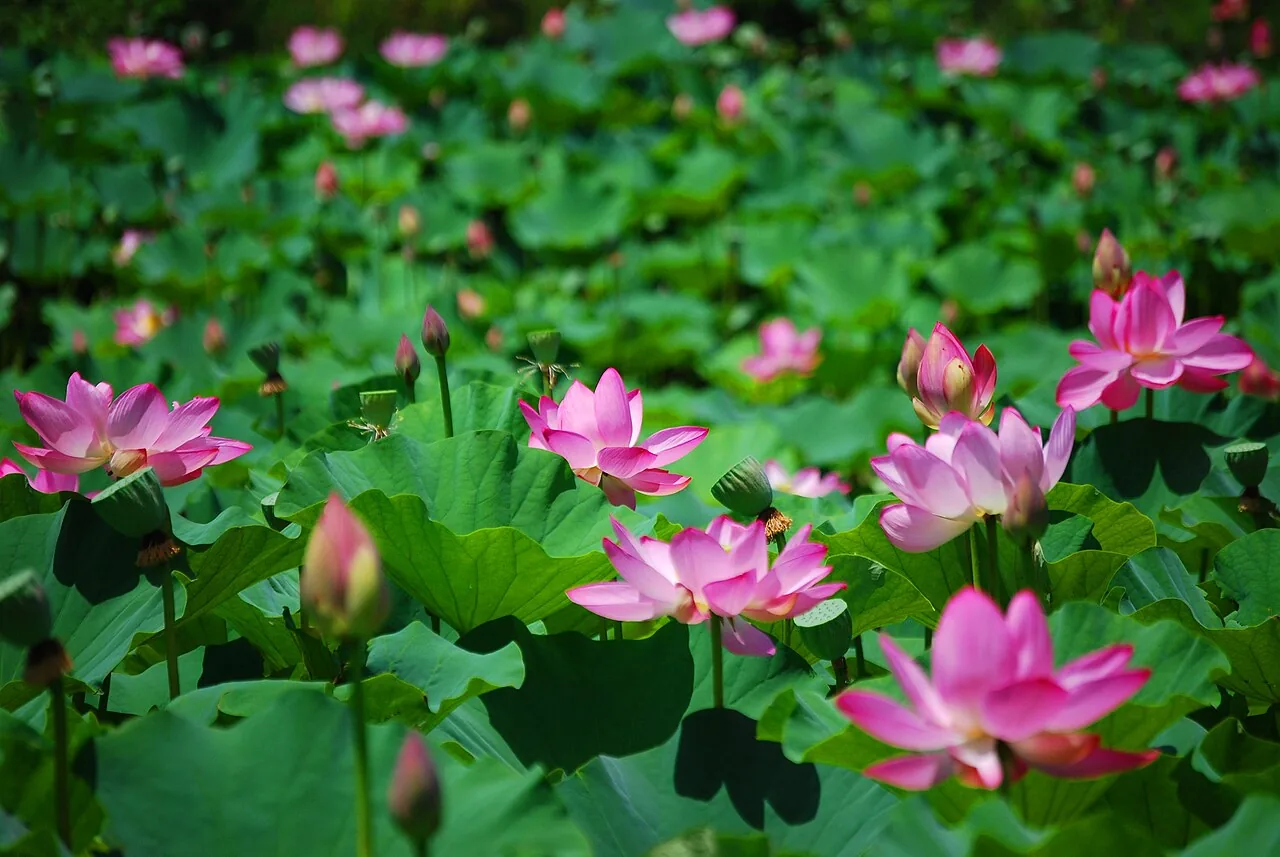
The lotus (莲花, liánhuā) is an aquatic perennial of the genus Nelumbo, family Nelumbonaceae, with two species: Nelumbo nucifera (sacred lotus, native to Asia and Australia) and Nelumbo lutea (American lotus). Despite its superficial resemblance to water lilies (Nymphaea), lotus is a distinct evolutionary lineage that diverged over 100 million years ago. The plant grows in shallow ponds, lakes, and flooded paddies, with stems anchored in mud and leaves floating on or rising above the water surface.

Lotus exhibits remarkable adaptation to aquatic environments. Its broad, waxy leaves are highly water-repellent—a phenomenon called the "lotus effect" (self-cleaning superhydrophobic surface) that has inspired biomimetic materials science. The flowers are thermoregulating, maintaining a constant temperature around 30°C (86°F) throughout their blooming period, which may help attract cold-blooded insect pollinators. Lotus seeds are extraordinarily long-lived—viable seeds over 1,300 years old have been germinated from dried lake sediments in China.

In East Asian spirituality, the lotus is the preeminent symbol of purity and enlightenment. Growing from muddy water yet producing an immaculate flower, it represents the Buddhist ideal of rising above desire and attachment to achieve spiritual purity (涅槃, nièpán). The lotus is one of the Eight Buddhist Treasures and appears in countless Buddhist sculptures, paintings, and mandalas. In Chinese culture, it also symbolizes harmony, fertility, and summer, and is associated with the goddess He Xian Gu among the Eight Immortals.

Every part of the lotus plant is used in East Asian cuisine and medicine. Lotus roots (莲藕, lián'ǒu) are a staple vegetable, eaten raw, stir-fried, stuffed, or pickled; their distinctive air-hole pattern makes them visually striking when sliced crosswise. Lotus seeds (莲子, liánzǐ) are used in soups, desserts, and mooncakes. Lotus leaves (荷叶, héyè) are used as natural food wrappers for steaming rice and meats, imparting a subtle fragrance. In traditional Chinese medicine, all parts of the lotus are used: roots cool the blood, seeds tonify the spleen, leaves clear summer heat, and stamens stop bleeding.
Relationship Network

How Lotus connects

Each relationship represents a meaningful semantic link between Lotus and other entities in the Atlas knowledge graph.

Seasonal Timing

Lotus across the solar year

These 24 solar terms mark when Lotus appears, peaks, or transforms through the seasons.

夏至 Summer

Summer Solstice

Solar term #10 · Jun 20-22 · Fire

Blooms at midsummer

View on Dao of Seasons ↗
大暑 Summer

Major Heat

Solar term #12 · Jul 22-24 · Fire

Peak bloom

View on Dao of Seasons ↗
立夏 Summer

Start of Summer

Solar term #7 · May 5-7 · Fire

Leaves emerge, buds form

View on Dao of Seasons ↗
Entity Constellation

Entities connected to Lotus

These entities share semantic relationships with Lotus in the Atlas knowledge graph.

Rice

Ingredient L1

Rice (米/稻) is the seed of Oryza sativa, a cereal grain that is the staple food for more than half the global population, ...

Bamboo Basket

Artifact L1

Bamboo Basket (竹篮, zhú lán) is a woven container crafted from split bamboo strips, used across East Asia for thousands o ...

Porcelain

Artifact L1

Porcelain (瓷器, cíqì) is a ceramic material made by heating kaolin clay and other materials in a kiln at temperatures exc ...

Harmony

和谐
Concept L1

Harmony (héxié) is a core value in Chinese philosophy, representing balance, coherence, and peaceful coexistence between ...

Shen Nong

神农
Person L1

Shen Nong (神农, Shén Nóng, "Divine Farmer") is a legendary cultural hero and mythological emperor of ancient China, tradi ...

Jiangnan

江南
Place L1

Jiangnan (江南, literally 'south of the Yangtze') is a culturally and historically rich region in southeastern China, enco ...

Ecological Intelligence

Concept L1

Ecological Intelligence (生态智慧) is the capacity to perceive, understand, and act in ways that align with the patterns and ...

Yangtze River

长江
Place L1

The Yangtze River (长江, Cháng Jiāng) is the longest river in Asia and the third-longest in the world, flowing 6,300 kilom ...

Mulberry

Plant L1

Mulberry (桑树) is a genus of deciduous trees in the family Moraceae, native to warm temperate and subtropical regions of ...

Sichuan

四川
Place L1

Sichuan (四川, Sìchuān) is a province in southwestern China, renowned for its dramatic topography encompassing the Sichuan ...

Fermentation

Practice L1

发酵 (Fājiào) is the microbial transformation of ingredients into preserved, flavour-rich foods central to Chinese cuisine ...

Panda

熊猫
Concept L1

The panda (熊猫, xióng māo) is an iconic species native to the bamboo forests of Sichuan, Yunnan, and the Yangtze River ba ...

Soy Sauce

Ingredient L1

Soy sauce (酱油) is a dark, salty liquid condiment made from fermented soybeans, roasted wheat, brine, and Aspergillus mol ...

Persimmon

Ingredient L1

Persimmon (柿子) is the sweet, orange fruit of trees in the genus Diospyros, native to China and widely cultivated across ...

Lotus Root

Ingredient L1

Lotus root (莲藕, lián'ǒu) is the edible rhizome of the lotus plant (Nelumbo nucifera), a perennial aquatic plant revered ...

Dragonfly

Animal L1

Dragonfly (蜻蜓, qīngtíng) is a predatory insect of the order Odonata, suborder Anisoptera, characterized by its elongated ...

Naming

Also known as

莲花 (synonym) Liánhuā (synonym) Lotus (synonym) Hasu (Japanese) (synonym) 연꽃 (Korean) (synonym) Nelumbo nucifera (synonym)
Atlas Role

Lotus in the Atlas

What this entity provides

Lotus (莲花) is the Atlas's most symbolically layered plant—a species whose entire biology (thermoregulating flowers, 1,300-year viable seeds, self-cleaning leaves) reads as a spiritual text. In Buddhism, it represents purity rising from mud; in Chinese culture, harmony, summer, and fertility. Every part is used: root as vegetable, seeds in desserts, leaves as wrappers, stamens in tea. Lotus connects Plant to Ingredient (lotus-root, lotus-seed), Concept (Buddhism, harmony), and Place (Jiangnan's ponds).

What it does NOT duplicate
  • lotus-root (莲藕)—which is a specific harvested part, not the whole plant
  • osmanthus (桂花)—another culturally significant flowering plant but terrestrial and autumn-blooming
Subsite References
dao-of-seasons

Lotus blossoms peak in high summer (Major Heat)—the defining floral image of the season.

atlasofheritage

The 'lotus effect' (superhydrophobic self-cleaning) has inspired biomimetic materials science, bridging ancient symbolism with modern innovation.

missing-umami

Lotus seeds and roots provide subtle sweetness and textural contrast in Jiangnan cuisine.

Sources & References

References for Lotus

Visual Gallery

Lotus in imagery

Lotus — visual reference
Watch

See Lotus in motion

李子柒 Liziqi · 34.2M views · YouTube ↗

Noal Farm · 4.0M views · YouTube ↗

Owner Site

The Way of Nature Atlas

Central Atlas — provides Overview pages for all entities. Does not produce original entity content, only aggregates and references.

ConceptCraftMountainRiverFestival