Ecological Intelligence backdrop
Entity Profile

Ecological Intelligence

Concept Level 1 — Concrete The Way of Nature Atlas ↗ #ecology #sustainability #wisdom #harmony

Ecological Intelligence (生态智慧) is the capacity to perceive, understand, and act in ways that align with the patterns and limits of living systems, a wisdom rooted in relationship rather than control.

Concept
primary type
Level 1
Concrete entity
12
relationships mapped
Overview

About Ecological Intelligence

Ecological Intelligence (生态智慧, "ecological wisdom") names the capacity to perceive and participate in the patterns of living systems with sensitivity, restraint, and skill. The Chinese term 生态 (shengtai, "ecology" or "living state") combines "life" (生) with "state" or "condition" (态), and 智慧 (zhihui) means "wisdom" or "intelligence." Together the term points not to a body of ecological knowledge but to a cultivated way of being that recognizes human flourishing as inseparable from the flourishing of the whole web of life. In The Way of Nature Atlas, Ecological Intelligence is the integrative capacity that binds together philosophical insight, embodied practice, and ecological awareness.

Ecological Intelligence is not tied to a single tradition but emerges at the intersection of multiple streams within the atlas's network. Its relationship to yin-yang provides the dialectical logic: ecological intelligence understands that health emerges from dynamic balance, not from the elimination of one pole by the other. Its connection to qi grounds it in the energetic reality that all beings are linked through shared vital flows. Its deep ties to natural-timing—the atlas records this relationship as bidirectional and doubled—teach that ecological intelligence is temporal before it is spatial: knowing when is more fundamental than knowing what. The link to harmony reframes harmony not as passive peace but as the active, intelligent coordination of diverse elements toward mutual thriving.

Ecological Intelligence expresses itself across the full range of practices in the atlas. In fermentation, ecological intelligence appears as the capacity to work with invisible microbial agencies, creating conditions for transformation rather than imposing control. In silk-reeling, it is the body's learned ability to spiral and yield, finding the path of least resistance through connected tissue. In the relationship to rice and lotus, ecological intelligence recognizes wetland agriculture and aquatic ecosystems as models of symbiosis and nutrient cycling. The panda, connected to ecological intelligence, exemplifies a species whose survival depends entirely on the health of bamboo forests—an emblem of the inextricable link between a single creature and its ecosystem. Cork, a sustainably harvested bark, demonstrates ecological intelligence in material practice: the tree is not felled, the harvest renews, the product is biodegradable.

Contemporary urgency has elevated ecological intelligence from philosophical curiosity to survival skill. Climate change, biodiversity collapse, and resource depletion are all symptoms of a civilization that has cultivated technical intelligence at the expense of ecological intelligence. The concept increasingly appears in fields as diverse as biomimicry, regenerative design, ecological economics, and systems thinking, each rediscovering patterns that the atlas's network already maps. Ecological intelligence connects to tai-chi because the martial art is a practice of ecological relationship at the interpersonal scale; to yin-yang and qi because the logic is the same across scales; to natural-timing because the first principle of ecological intelligence is to do the right thing at the right time.

In The Way of Nature Atlas, Ecological Intelligence is the concept that gathers the atlas's diverse threads into a unified ethical and practical orientation. It connects to natural-timing (the doubled link signals their near-identity), harmony, fermentation, panda, silk-reeling, rice, lotus, yin-yang, qi, tai-chi, and cork. It is both a description of how nature already works and a prescription for how humans might learn to work with nature rather than against it. The atlas positions Ecological Intelligence not as an abstract ideal but as a trainable capacity, developed through the very practices—tai-chi, fermentation, silk-reeling—that the atlas documents. It is the answer to the question that the atlas implicitly poses: what kind of intelligence does a flourishing life on Earth require?
Relationship Network

How Ecological Intelligence connects

Each relationship represents a meaningful semantic link between Ecological Intelligence and other entities in the Atlas knowledge graph.

Entity Constellation

Entities connected to Ecological Intelligence

These entities share semantic relationships with Ecological Intelligence in the Atlas knowledge graph.

Natural Timing

Concept L1

Natural Timing (自然时序) is the rhythm of seasons, the succession of natural events, and the wisdom of acting in accord wit ...

Harmony

和谐
Concept L1

Harmony (héxié) is a core value in Chinese philosophy, representing balance, coherence, and peaceful coexistence between ...

Fermentation

Practice L1

发酵 (Fājiào) is the microbial transformation of ingredients into preserved, flavour-rich foods central to Chinese cuisine ...

Panda

熊猫
Concept L1

The panda (熊猫, xióng māo) is an iconic species native to the bamboo forests of Sichuan, Yunnan, and the Yangtze River ba ...

Silk Reeling

Practice L1

Silk Reeling (缠丝劲, chán sī jìn) is a fundamental internal movement practice within Chen-style Tai Chi, characterized by ...

Rice

Ingredient L1

Rice (米/稻) is the seed of Oryza sativa, a cereal grain that is the staple food for more than half the global population, ...

Lotus

Plant L1

Lotus (莲花) is an aquatic perennial plant of the genus Nelumbo, native to Asia and Australia, revered in Buddhism and Hin ...

Yin Yang

Concept L1

Yin Yang (阴阳) describes the dynamic interplay of complementary opposites—dark and light, yielding and firm—that drives a ...

Qi

Concept L1

Qi (气) is the fundamental life force and animating energy that flows through all living and non-living things, the vital ...

Tai Chi

太极拳
Practice L2

Tai chi is an ancient Chinese martial art that combines gentle physical exercise and stretching with mindfulness.

Cork

Artifact L1

Cork (软木, ruǎnmù) is a natural material harvested from the bark of the cork oak (Quercus suber), though in the East Asia ...

Naming

Also known as

eco-wisdom (synonym) ecological wisdom (synonym) 生态智 (synonym) environmental intelligence (synonym) systems intelligence (synonym) eco-literacy (synonym) ecological awareness (synonym)
Atlas Role

Ecological Intelligence in the Atlas

What this entity provides

Ecological Intelligence (生态智慧) is the Atlas's integrative meta-concept—the capacity to perceive and act in alignment with living systems. It binds together philosophical insight (Daoism, yin-yang), temporal awareness (natural-timing), and embodied practice (fermentation, silk-reeling). It is the 'how' that answers the 'why' of every sustainable practice documented in the Atlas.

What it does NOT duplicate
  • natural-timing (自然时序)—which is the temporal aspect, while ecological intelligence is broader (spatial, relational, systemic)
  • harmony (和谐)—which is the condition of balance, while ecological intelligence is the capacity to create and maintain that balance
Subsite References
atlasofheritage

Ecological Intelligence is the Atlas's contemporary framing for traditional Chinese wisdom—showing how ancient practices embody modern ecological principles.

dao-of-seasons

Natural timing is the temporal dimension of ecological intelligence—knowing when is more fundamental than knowing what.

missing-umami

Fermentation is ecological intelligence in the kitchen—collaborating with invisible microbial agencies rather than imposing control.

Sources & References

References for Ecological Intelligence

Visual Gallery

Ecological Intelligence in imagery

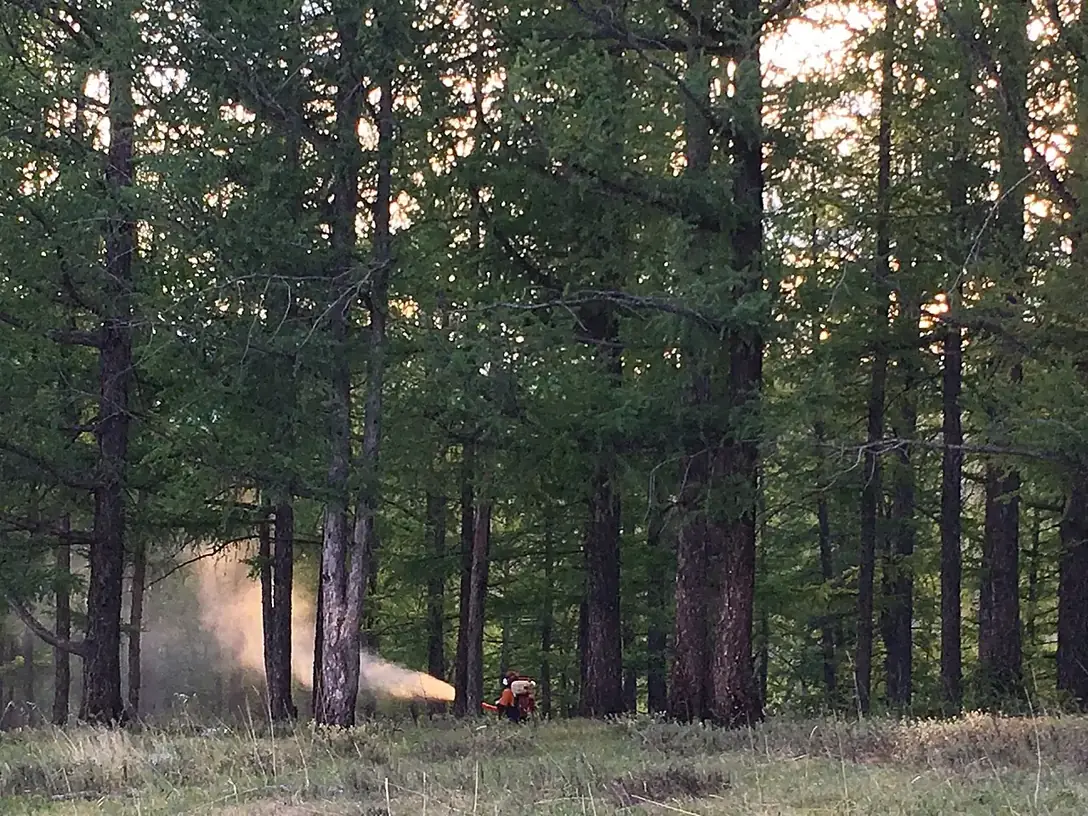
Ecological Intelligence — visual reference
Watch

See Ecological Intelligence in motion

Sprouts · 1.0M views · YouTube ↗

Envirosuite · 8K views · YouTube ↗

Owner Site

The Way of Nature Atlas

Central Atlas — provides Overview pages for all entities. Does not produce original entity content, only aggregates and references.

ConceptCraftMountainRiverFestival