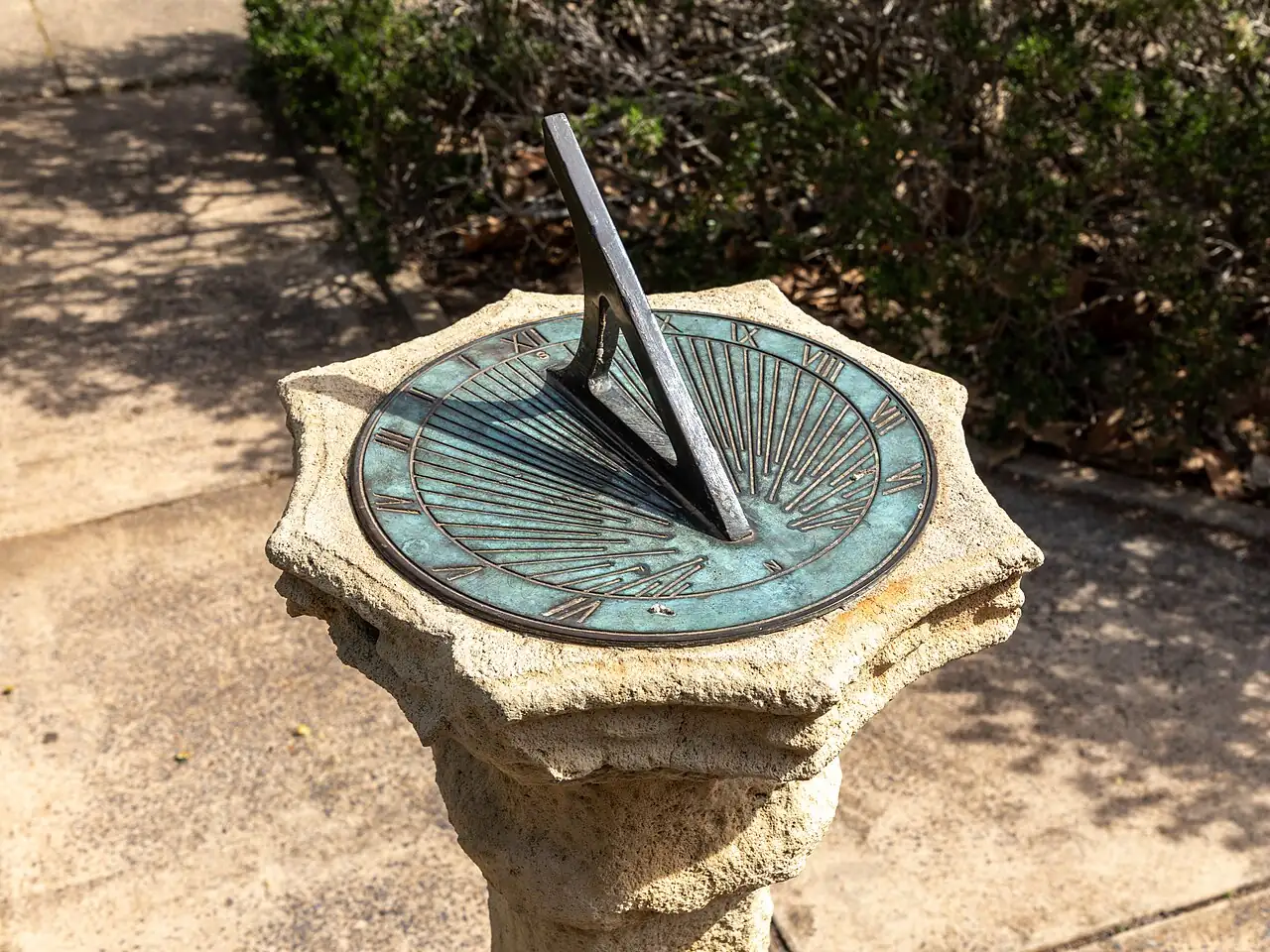
Natural Timing (自然时序, "natural order of seasons and moments") names the rhythm that organizes all living processes, from the migration of birds to the fermentation of grains. The Chinese term 自然 (ziran) means "self-so" or "what occurs of itself," and 时序 (shixu) means "sequence of seasons or times." Together they evoke a world that does not follow a human schedule but instead unfolds according to its own internal order, one that humans can observe, respect, and harmonize with but cannot command. In The Way of Nature Atlas, Natural Timing is the temporal dimension of ecological and philosophical understanding—the "when" that gives meaning to the "what" and "how" of practice.
Natural Timing draws on ideas present across Chinese traditions, though it resonates most deeply with Daoism and the agricultural calendar traditions that preceded and accompanied it. Daoism connects to natural-timing directly: the Daoist farmer, cook, and martial artist all wait for the right moment and do not force outcomes before they are ripe. The relationship between natural-timing and yin-yang is foundational, because the alternation of yin and yang is precisely the mechanism that produces seasonal change. Natural-timing connects to harmony because harmony arises when each action is performed at its appropriate time—the swallow returns in spring, the mulberry leaf is picked when most tender, the rice is planted after the last frost. Ritual, in this context, is the formalization of natural timing into human ceremony, marking solstices, harvests, and transitions.
Natural Timing manifests across the full spectrum of human activity recorded in the atlas. In agriculture, it governs the planting of rice, the harvesting of mulberry leaves for silkworms, and the gathering of cork from oak bark. In food and drink, fermentation is the quintessential natural-timing practice—yeast and bacteria act on their own schedule, and the fermenter's skill lies in waiting and reading signs, not in forcing speed. The tea-ceremony, which natural-timing relates to, is a refined practice of seasonal awareness: the water temperature, the vessel, and the steeping duration all shift with the season. In embodied practice, standing-meditation connects to natural-timing because the body's energy follows daily and seasonal cycles. Even the swallow, a migratory bird, is a living embodiment of natural timing, appearing and disappearing with the seasons in a rhythm humanity has observed for millennia.
Contemporary relevance of natural timing is especially acute in an era of climate disruption, year-round artificial lighting, and 24/7 economies. The concept challenges the modern assumption that all times are equivalent and that nature's schedule can be overridden without cost. Seasonal eating, circadian rhythm science, regenerative agriculture, and permaculture all rediscover principles that natural timing has articulated for centuries. Natural-timing's relationship to ecological-intelligence underscores that true intelligence is not about dominating natural processes but about synchronizing with them. In a world of instant gratification, natural timing insists that some goods—health, flavor, understanding—cannot be rushed.
In The Way of Nature Atlas, Natural Timing is the pulse that sets the tempo for the entire network of entities. It connects to tai-chi because even the slowest movement must find its rhythm; to ecological-intelligence because timing is the signature of ecological wisdom; to yin-yang because each season is a phase in the cosmic alternation; and to harmony, swallow, standing-meditation, daoism, ritual, rice, mulberry, tea-ceremony, qi, and cork. Natural Timing embodies fermentation, recognizing in the patient alchemy of microbes the purest example of working with time rather than against it. The atlas positions Natural Timing as the corrective to the modern cult of speed—a reminder that the best things happen at the speed of nature.