Daoism backdrop
Entity Profile

Daoism

道教
Concept Level 1 — Concrete The Way of Nature Atlas ↗ #Daoism #Chinese philosophy #wu-wei #spirituality

Daoism (道教), the teaching of the Way, is a philosophical and religious tradition originating in ancient China that centers on living in harmony with the Dao, the natural, spontaneous order of the universe.

Concept
primary type
Level 1
Concrete entity
21
relationships mapped
Overview

About Daoism

Daoism (道教, "Teaching of the Way") is a philosophical and religious tradition that centers on the Dao—the unnameable, generative source and spontaneous order of the cosmos. The Chinese term 道教 combines Dao (道, "way" or "path") with jiao (教, "teaching" or "tradition"), distinguishing it from philosophical Daoism (道家, "School of the Way") while retaining the same root concept. Daoism understands the Dao not as a deity or a fixed principle but as the effortless, pattern-generating process through which all things arise, transform, and return. In The Way of Nature Atlas, Daoism provides the foundational lens through which every other entity—from qi to natural-timing—finds its philosophical footing.

Daoism weaves through multiple Chinese traditions, though its core insights remain distinct from Confucian ritualism and Buddhist metaphysics. Daoism shares with Confucianism a reverence for harmony but locates that harmony in spontaneous alignment with the Dao rather than in social hierarchy or prescribed conduct. Daoist texts such as the Dao De Jing and Zhuangzi emphasize wu-wei (effortless action), simplicity, and the futility of imposing rigid order on a world that orders itself. This worldview finds concrete expression in the relationships Daoism holds within the atlas: its connection to qi as the energetic substrate of the Dao, to yin-yang as the Dao's complementarity in motion, and to wudang-mountains as a living landscape consecrated to Daoist cultivation.

Daoism manifests not only in scripture and temple but in embodied practices and everyday crafts. Through tai-chi, standing-meditation, and qigong, Daoist principles of yielding, circulation, and presence become physical disciplines. Through fermentation, silk-reeling, calligraphy, and tea, the Daoist reverence for natural process and patient transformation is enacted in material form. The cicada Daoism connects to symbolizes the Daoist ideal of spontaneous transformation—emerging from the earth, shedding its shell, singing without effort. Pine trees, jade, and mount-tai each carry Daoist resonance as emblems of endurance, purity, and sacred geography. Ritual in the Daoist context is not empty ceremony but a calibrated participation in cosmic rhythms, linking Daoism to natural-timing and the wider ecological pulse.

In contemporary contexts, Daoism offers resources for ecological thinking, embodied cognition, and critiques of hyper-productivity. The notion of wu-wei resonates with modern understandings of complex systems that self-organize without central control. Daoist attention to qi and breath practices has entered global wellness culture through qigong and tai-chi, while the Daoist appreciation for wildness and the uncarved block (pu) challenges industrial civilization's drive to dominate nature. Daoism's relationship to ecological-intelligence in the atlas signals its growing relevance to sustainability discourse, where spontaneous order and symbiosis are key design principles.

In The Way of Nature Atlas, Daoism is the conceptual root system from which the atlas's understanding of nature, practice, and wisdom grows. It does not sit alongside the other entities as a peer—it is the ground they stand on. Every practice that joins movement to breath, every craft that respects material intelligence, and every concept that speaks of harmony with the Dao echoes Daoism's central insight: that the Way cannot be forced, only followed. Daoism connects to tai-chi, qi, yin-yang, wudang-mountains, standing-meditation, mount-tai, cicada, silk-reeling, natural-timing, ritual, fermentation, calligraphy, tea, qigong, panda, jade, and pine, forming a dense web of relationship that makes the atlas a coherent Daoist geography.
Relationship Network

How Daoism connects

Each relationship represents a meaningful semantic link between Daoism and other entities in the Atlas knowledge graph.

Entity Constellation

Entities connected to Daoism

These entities share semantic relationships with Daoism in the Atlas knowledge graph.

Natural Timing

Concept L1

Natural Timing (自然时序) is the rhythm of seasons, the succession of natural events, and the wisdom of acting in accord wit ...

Ritual

Concept L1

Ritual (仪式, yíshì) refers to formalized patterns of conduct that connect human life to cosmic and social order. Through ...

Fermentation

Practice L1

发酵 (Fājiào) is the microbial transformation of ingredients into preserved, flavour-rich foods central to Chinese cuisine ...

Calligraphy

Practice L1

书法 (Shūfǎ) is the art of expressive brush writing that embodies China's philosophical and aesthetic traditions. Combinin ...

Tea

Ingredient L1

Tea (茶) is an aromatic beverage made from the leaves of Camellia sinensis, originating in China over 4,000 years ago and ...

Tai Chi

太极拳
Practice L2

Tai chi is an ancient Chinese martial art that combines gentle physical exercise and stretching with mindfulness.

Qi

Concept L1

Qi (气) is the fundamental life force and animating energy that flows through all living and non-living things, the vital ...

Yin Yang

Concept L1

Yin Yang (阴阳) describes the dynamic interplay of complementary opposites—dark and light, yielding and firm—that drives a ...

Wudang Mountains

武当山
Place L1

The Wudang Mountains (武当山, Wǔdāng Shān) are a sacred Daoist mountain range in Hubei Province, northwestern China. Renown ...

Standing Meditation

Practice L1

Standing Meditation (站桩, zhàn zhuāng), also known as "standing like a post" or "standing pole," is a foundational practi ...

Mount Tai

泰山
Place L1

Mount Tai (泰山, Tai Shan) is one of the Five Great Mountains (五岳, Wuyue) of China, located in Shandong Province. Rising t ...

Cicada

Animal L1

Cicada (蝉, chán) is an insect of the order Hemiptera, infraorder Cicadomorpha, known for the loud, distinctive mating ca ...

Silk Reeling

Practice L1

Silk Reeling (缠丝劲, chán sī jìn) is a fundamental internal movement practice within Chen-style Tai Chi, characterized by ...

Qigong

Practice L1

气功 (Qìgōng) is a system of breath, movement, and meditation practices for cultivating qi (vital energy). Originating in ...

Panda

熊猫
Concept L1

The panda (熊猫, xióng māo) is an iconic species native to the bamboo forests of Sichuan, Yunnan, and the Yangtze River ba ...

Jade

Mineral L1

Jade (玉, yù) refers to two distinct metamorphic rocks treasured in East Asian culture: nephrite, a calcium magnesium sil ...

Pine

Plant L1

Pine (松树) is a genus of coniferous evergreen trees in the family Pinaceae, widely distributed across the Northern Hemisp ...

Ginkgo

Plant L1

Ginkgo (银杏) is a unique living fossil tree species, the only surviving member of the division Ginkgophyta, native to Chi ...

Crane

Animal L1

Crane (鹤, hè) is a large, long-necked, long-legged wading bird of the family Gruidae

Meditation

Practice L1

Meditation (冥想, míng xiǎng) is the practice of training attention and awareness to achieve mental clarity, emotional cal ...

Wuji

无极
Concept L1

Wuji (无极, wú jí) is the undifferentiated, limitless state that precedes all form and distinction in Daoist cosmology. As ...

Naming

Also known as

Taoism (synonym) Daojiao (synonym) The Way (synonym) 道家 (philosophical Daoism) (synonym)
Atlas Role

Daoism in the Atlas

What this entity provides

Daoism (道教) is the Atlas's foundational philosophical lens. It provides the conceptual framework through which every other entity—from qi to natural-timing, from wu-wei to yin-yang—finds its coherence. Daoism connects the abstract (the Dao as unnameable source) to the embodied (tai-chi, qigong, standing-meditation) and the material (fermentation, tea, calligraphy as expressions of natural process).

What it does NOT duplicate
  • harmony (和谐)—which is the condition produced by Daoist practice, not the tradition itself
  • yin-yang (阴阳)—which is the mechanism within Daoist cosmology, not the whole tradition
Subsite References
atlasofheritage

Daoism is the philosophical backbone of the Atlas, providing the understanding that harmony emerges from spontaneous alignment with the Dao rather than from imposed order.

taichi-institute

All internal martial arts practices in the Atlas derive their principles from Daoist cosmology.

dao-of-seasons

The agricultural and ritual calendar is a Daoist expression of aligning human activity with cosmic rhythms.

Sources & References

References for Daoism

Visual Gallery

Daoism in imagery

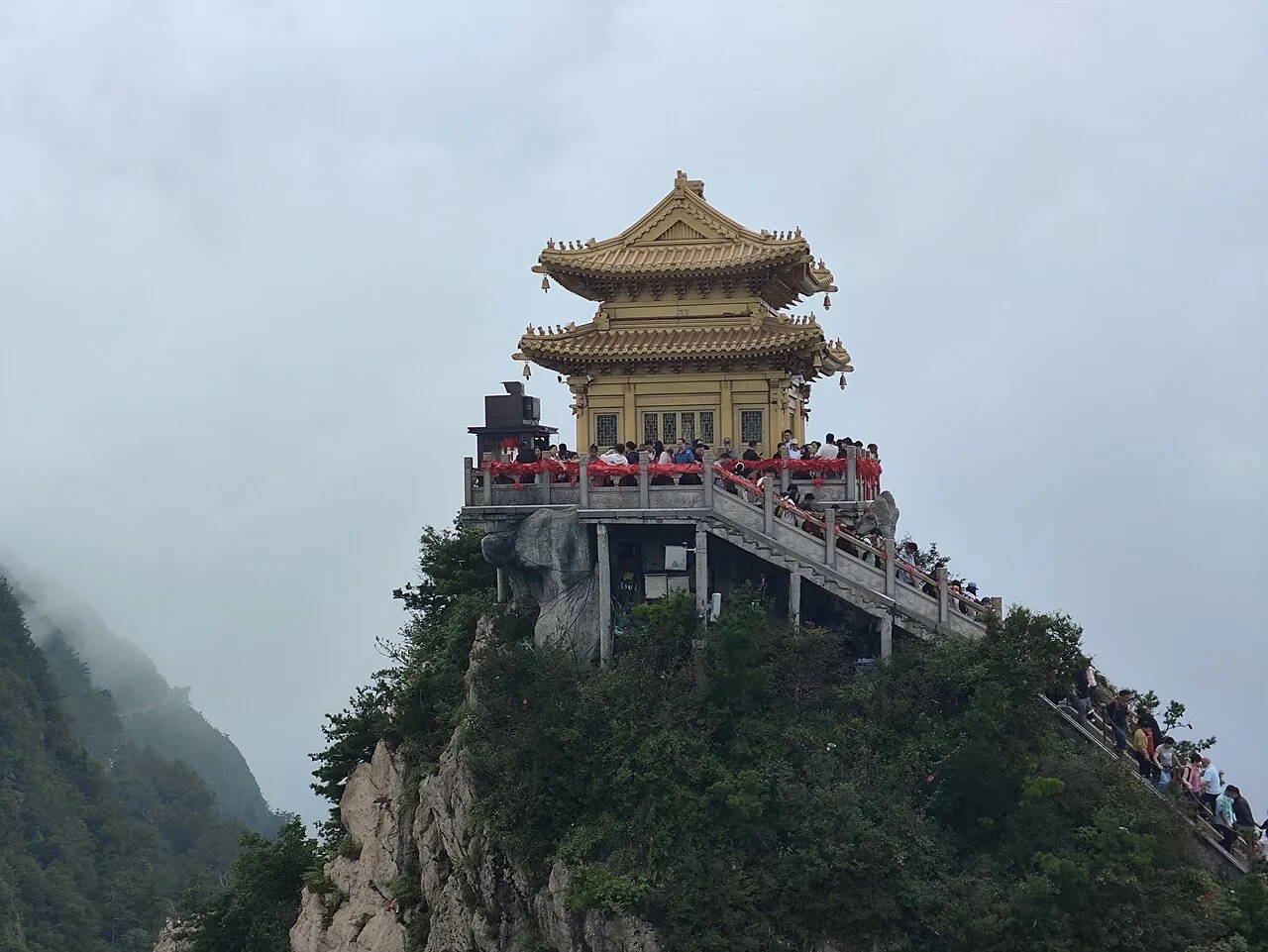
Daoism — visual reference
Watch

See Daoism in motion

Einzelgänger · 7.4M views · YouTube ↗

Einzelgänger · 7.2M views · YouTube ↗

Owner Site

The Way of Nature Atlas

Central Atlas — provides Overview pages for all entities. Does not produce original entity content, only aggregates and references.

ConceptCraftMountainRiverFestival