The Wudang Mountains (武当山, Wǔdāng Shān) are a sacred Daoist mountain range in Hubei Province, northwestern China. Renowned for their mist-shrouded peaks, ancient temple complexes, and status as the spiritual home of Wudang Tai Chi and Qigong, they are a UNESCO World Heritage Site.
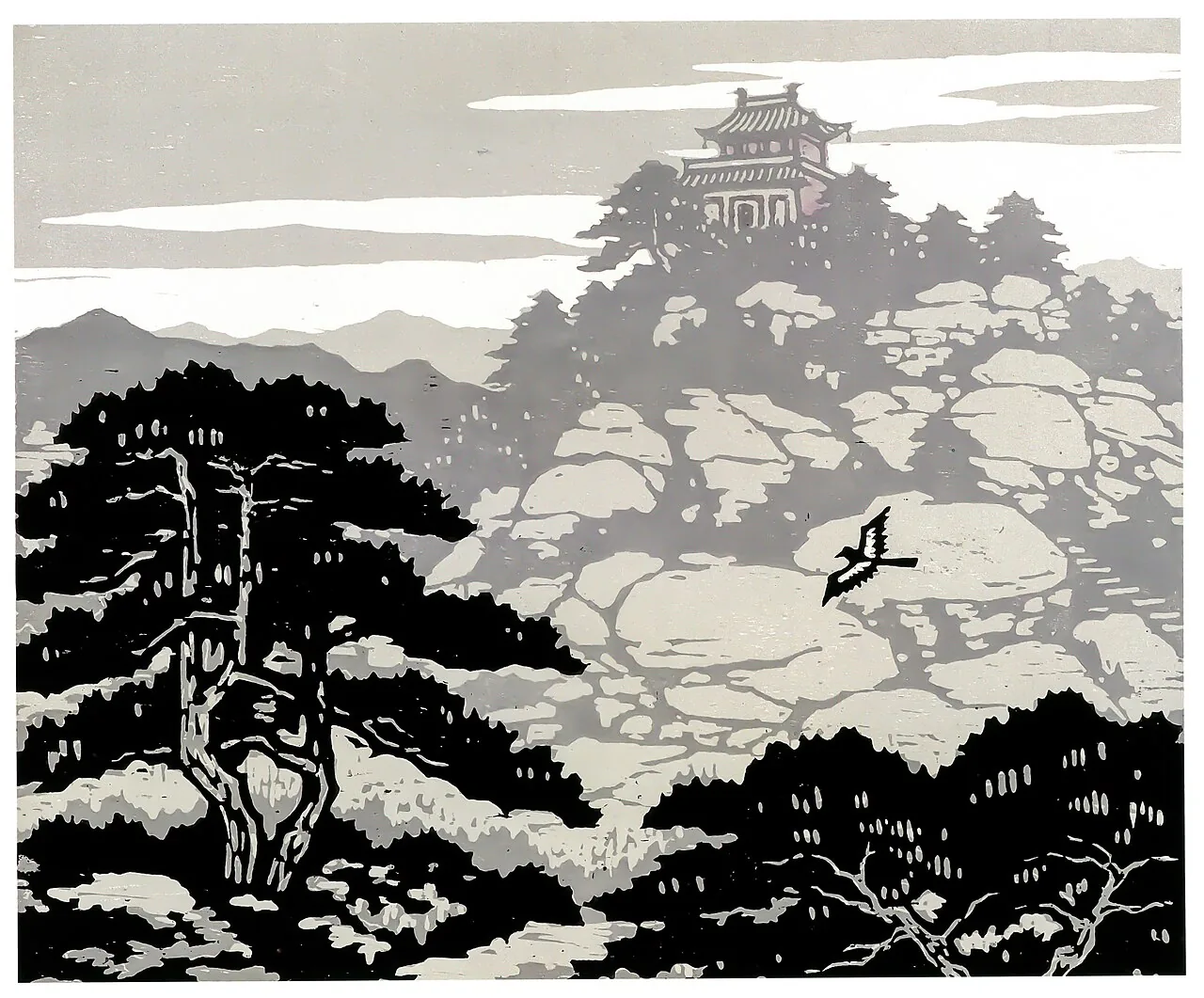
The Wudang Mountains (武当山, Wǔdāng Shān) rise in northwestern Hubei Province, a chain of 72 peaks extending across approximately 400 square kilometers. The highest summit, Tianzhu Peak (天柱峰, 'Heavenly Pillar Peak'), reaches 1,612 meters. Steep forested slopes, dramatic cliffs, and a constant veil of mist give Wudang its ethereal atmosphere. Ancient cypress and pine trees cling to the mountainsides, and streams cascade through narrow ravines.
The range experiences a subtropical monsoon climate, with abundant rainfall and mist that shrouds the mountains for much of the year. The dense mixed forests support diverse wildlife including macaques, pheasants, and numerous bird species. The cooler upper slopes provide a natural environment for meditation and physical cultivation. The Wudang Mountains are geographically connected to broader mountain systems that extend toward Yunnan, tracing a related_to yunnan mountain range system.
Wudang is one of the most sacred sites in Chinese religious and martial history. It is the legendary birthplace of Wudang Tai Chi (武当太极拳), closely related_to tai-chi and its foundational principles of Yin-Yang and Qi cultivation. The mountains are equally related_to qigong (气功) — the practice of circulating vital energy — and to standing meditation (站桩, zhan zhuang), all of which have been cultivated in its monasteries for centuries. Wudang is profoundly related_to Daoism (道教): its temples, including the Golden Hall (金殿) on Tianzhu Peak, are among the finest surviving examples of Daoist architecture. The practice of Tai Chi is traditionally said to be practiced_in wudang-mountains, where adepts harmonize their movements with the mountain's natural Qi (气). The peak pilgrimage season occurs during the start of summer, when the weather is most conducive to outdoor training and temple visits.
Wudang stands alongside Mount Tai among China's sacred peaks as a living repository of Daoist practice. It is related_to the concepts of Qi and harmony through its training traditions, and its influence extends to the broader internal martial arts of Chen Village and the Silk Reeling methods shared across lineages.
Each relationship represents a meaningful semantic link between Wudang Mountains and other entities in the Atlas knowledge graph.
These 24 solar terms mark when Wudang Mountains appears, peaks, or transforms through the seasons.
Solar term #7 · May 5-7 · Fire
Peak pilgrimage and practice season
View on Dao of Seasons ↗These entities share semantic relationships with Wudang Mountains in the Atlas knowledge graph.
Daoism (道教), the teaching of the Way, is a philosophical and religious tradition originating in ancient China that cente ...
Qi (气) is the fundamental life force and animating energy that flows through all living and non-living things, the vital ...
Tai chi is an ancient Chinese martial art that combines gentle physical exercise and stretching with mindfulness.
气功 (Qìgōng) is a system of breath, movement, and meditation practices for cultivating qi (vital energy). Originating in ...
Yunnan (云南, Yúnnán, 'south of the clouds') is a province in southwestern China renowned for its extraordinary biodiversi ...
The Wudang Mountains (武当山) are the Atlas's sacred Daoist practice landscape—a UNESCO World Heritage site of 72 mist-shrouded peaks that is the legendary birthplace of Wudang Tai Chi and a center of qigong cultivation for centuries. Its temples, including the Golden Hall on Tianzhu Peak, are among the finest surviving examples of Daoist architecture. Wudang connects Place to Practice (tai-chi, qigong, standing-meditation), Concept (Daoism, qi, yin-yang), and Person (Daoist adepts and immortals).
Wudang Mountains are the spiritual home of Wudang-style Tai Chi and a living repository of Daoist internal arts.
The peak pilgrimage season begins at Start of Summer, when mountain weather is most conducive to outdoor training.
Wudang's temple architecture embodies feng shui principles—buildings harmonized with mountain qi flows.
George Thompson · 71K views · YouTube ↗
CGTN · 28K views · YouTube ↗
Central Atlas — provides Overview pages for all entities. Does not produce original entity content, only aggregates and references.
Owner since 2026-01-01