Entity Profile
Tai Chi
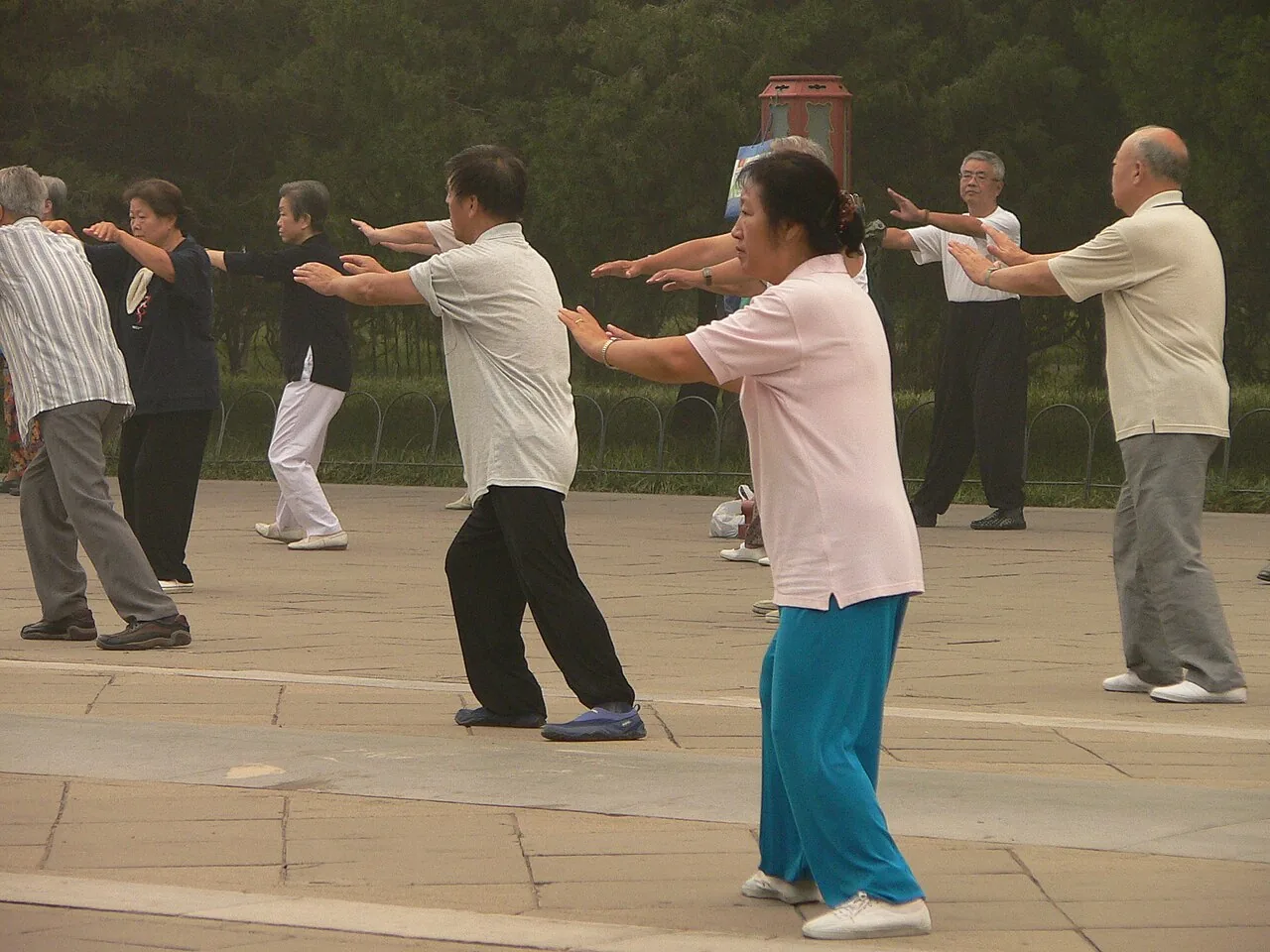
太极拳Tai chi is an ancient Chinese martial art that combines gentle physical exercise and stretching with mindfulness.
Practice
primary type
Level 2
Practice entity
25
relationships mapped
Tai chi is an ancient Chinese martial art that combines gentle physical exercise and stretching with mindfulness.
太极拳 (Tàijíquán) is a classical Chinese internal martial art that synthesizes combat technique, meditative discipline, and therapeutic movement into a single flowing practice. Its name translates to "supreme ultimate fist," drawn from the cosmological concept of tàijí — the primordial unity from which yin and yang arise. Originating in Chen Village (陈沟, Chén Gōu) of Henan Province during the mid-17th century, tai chi developed as a martial system fusing existing boxing methods with Daoist philosophy and traditional Chinese medicine. Over the centuries, it branched into major styles — Chen, Yang, Wu, Hao, and Sun — each interpreting core principles through distinct postural and rhythmic preferences while sharing the same theory of internal power (内劲, nèijìn). Today, tens of millions practice tai chi worldwide, not only as a martial art but as a culturally rooted health regimen recommended by medical authorities for fall prevention, balance, and stress reduction.
At its core, tai chi is a methodical practice of slow, weight-shifting movement coordinated with deep diaphragmatic breathing. The practitioner moves through a sequence of postures — a form (套路, tàolù) — at a pace allowing full awareness of each transition, joint alignment, and weight distribution. Central to the practice is cultivation of qì (气), guided through the body along meridian pathways mapped by acupuncture theory. This internal dimension is trained through qigong (气功), breath-focused exercises integrated into warm-ups and cool-downs. The foundational standing meditation (站桩, zhàn zhuāng) develops structural relaxation and alignment, while silk-reeling exercises (缠丝功, chán sī gōng) — especially in Chen Style — build the spiraling whole-body connection through which internal power is expressed. The practice is governed by yin-yang (阴阳): every movement contains its opposite — yielding conceals an attack, emptiness anticipates fullness, and the forward hand is balanced by a retreating one.
The health benefits of regular tai chi practice are well-documented. A 2023 meta-analysis in the *Journal of the American Geriatrics Society* found that tai chi significantly reduces fall risk in older adults by improving dynamic balance and proprioception. Other studies show improvements in cardiovascular function, immune response, and psychological well-being — effect sizes comparable to moderate aerobic exercise and cognitive behavioral therapy. Unlike high-impact activities, tai chi imposes minimal joint strain, making it accessible across the lifespan. Within the Dao of Seasons framework, tai chi functions as a harmonizing rhythm — a structured practice attuning the body to nature's cyclical pulses: gathering inward during winter, expanding outward in summer, and maintaining equilibrium through spring and autumn transitions.
Tai chi's relationship with natural timing is both practical and symbolic. The traditional training calendar follows the solar terms (节气, jiéqì), with practice intensity shifting according to season. Around the Summer Solstice — the yang peak — practitioners shorten sessions, favor cooler times like dawn or dusk, and move with attention to the dispersing quality of maximum yang energy. In winter, forms are held longer with more contained movements, reflecting yin's inward-storing quality. This alignment with natural timing (自然时序, zìrán shíxù) positions tai chi as a living dialogue with the environment. The aesthetic principle of harmony (和谐, héxié) pervades this interaction: the practitioner seeks not to dominate nature but to attune to it, finding effortless action (无为, wúwéi) through precise alignment rather than force.
Culturally, tai chi bridges martial, medical, and spiritual East Asian traditions. Its Daoist philosophical roots are unmistakable: the Tai Chi Classics (太极拳论), attributed to 18th-century master Wang Zongyue, explicitly reference wújí (无极, the limitless) and tàijí, organizing the art around a cosmological framework. The practice has been historically associated with the Wudang Mountains (武当山), a Daoist sacred site, though scholarly consensus now places Chen Village as tai chi's verifiable birthplace. In the 20th century, tai chi transformed from family art to public health policy: China standardized simplified forms like the 24-posture Yang Style in 1956, launching global dissemination. UNESCO recognized tai chi as an Intangible Cultural Heritage of Humanity in 2020, and the practice continues evolving through dialogue between medical researchers, martial artists, and movement educators.
The ecosystem of related practices enriches the tradition at every level. Push-hands (推手, tuī shǒu) bridges solo form and free sparring, training sensitivity to redirect an opponent's force through relaxed awareness — a direct yin-yang application in a relational context. Silk-reeling provides Chen Style's core mechanical curriculum, its spiral-torque principles reappearing across all styles as the foundation of connected movement. Standing meditation and qigong are integral layers: standing builds rooted structural awareness without which tai chi becomes mere calisthenics; qigong refines the breath–intention–movement coordination giving forms their meditative depth. For the atlas of seasonal practice, tai chi provides the kinetic and philosophical core around which the broader health, martial, and meditative traditions are organized.
Each relationship represents a meaningful semantic link between Tai Chi and other entities in the Atlas knowledge graph.
Tai Chi and calligraphy share principles of flow and balance
View Calligraphy →birthplace of Chen-style Tai Chi
View Chen Village →philosophical root
View Daoism →Tai Chi embodies ecological body intelligence
View Ecological Intelligence →aesthetic principle
View Harmony →Meditation is core to tai chi practice
View Meditation →seasonal practice alignment
View Natural Timing →partner exercise
View Push Hands →energy/breath foundation
View Qi →related internal practice
View Qigong →Tai Chi practiced as moving ritual
View Ritual →core training method (Chen Style)
View Silk Reeling →foundational practice
View Standing Meditation →Both emphasize mindfulness and presence
View Tea Ceremony →Tai chi conducts qi and strength without contending — 以无为运劲, the effort is placed in the posture rather than in overcoming the opponent.
View Wu Wei →traditional practice location
View Wudang Mountains →Wudang Tai Chi lineage
View Wudang Mountains →Wuji is the undifferentiated state from which tai chi arises
View Wuji →balance principle of movement
View Yin Yang →These 24 solar terms mark when Tai Chi appears, peaks, or transforms through the seasons.
Solar term #10 · Jun 20-22 · Fire
Yang peak — shorter practice, cooler times
View on Dao of Seasons ↗These entities share semantic relationships with Tai Chi in the Atlas knowledge graph.
Qi (气) is the fundamental life force and animating energy that flows through all living and non-living things, the vital ...
Yin Yang (阴阳) describes the dynamic interplay of complementary opposites—dark and light, yielding and firm—that drives a ...
Daoism (道教), the teaching of the Way, is a philosophical and religious tradition originating in ancient China that cente ...
Natural Timing (自然时序) is the rhythm of seasons, the succession of natural events, and the wisdom of acting in accord wit ...
Harmony (héxié) is a core value in Chinese philosophy, representing balance, coherence, and peaceful coexistence between ...
气功 (Qìgōng) is a system of breath, movement, and meditation practices for cultivating qi (vital energy). Originating in ...
推手 (Tuīshǒu) is a partnered sensitivity exercise from the tai chi tradition that develops tactile awareness, structural ...
Standing Meditation (站桩, zhàn zhuāng), also known as "standing like a post" or "standing pole," is a foundational practi ...
Silk Reeling (缠丝劲, chán sī jìn) is a fundamental internal movement practice within Chen-style Tai Chi, characterized by ...
The Wudang Mountains (武当山, Wǔdāng Shān) are a sacred Daoist mountain range in Hubei Province, northwestern China. Renown ...
Chen Village (陈家沟, Chenjiagou) is a small rural village in Wen County, Henan Province, widely regarded as the birthplace ...
书法 (Shūfǎ) is the art of expressive brush writing that embodies China's philosophical and aesthetic traditions. Combinin ...
Tea Ceremony (茶道, chá dào — "Way of Tea") is the formal, ritualized practice of preparing and presenting tea as a spirit ...
Ritual (仪式, yíshì) refers to formalized patterns of conduct that connect human life to cosmic and social order. Through ...
Ecological Intelligence (生态智慧) is the capacity to perceive, understand, and act in ways that align with the patterns and ...
Wu-wei (无为) is non-coercive action: acting without forcing an outcome, so the natural course of things is not overridden ...
Meditation (冥想, míng xiǎng) is the practice of training attention and awareness to achieve mental clarity, emotional cal ...
Wuji (无极, wú jí) is the undifferentiated, limitless state that precedes all form and distinction in Daoist cosmology. As ...
Tai chi serves as the primary kinetic practice within the atlas, providing the structured movement framework through which seasonal energy principles (yin-yang, natural timing) are embodied by the practitioner. It bridges the conceptual layer of Daoist philosophy with the tangible, repeatable practice of form training, partner work, and breath cultivation. Within a seasonal-arranged knowledge system, tai chi is the central Practice entity that grounds abstract cosmological ideas (wuji, taiji, yin-yang) in physically accessible routines that change with the solar terms.
Tai chi is the principal vehicle for guiding and cultivating qì through form practice, breath coordination, and intent (意, yì). Every posture sequence is designed to open or close specific meridian pathways, making tai chi the applied expression of qì theory.
The entire structure of tai chi forms is an embodied philosophy of yin and yang: each posture's weight distribution (full/empty), direction (advance/retreat), and timing (expansion/contraction) enacts the yin-yang dynamic. Push-hands training makes this relational — one partner yields while the other advances, in continuous reciprocal flow.
Tai chi's classical texts (Tai Chi Classics, 太极拳论) explicitly derive the art's theory from Daoist cosmology. The stages of training — from wuji (absence of differentiation) through taiji (polarized unity) to the eight trigrams (八卦, bāguà) — directly mirror Daoist creation narratives.
Traditional tai chi training adjusts practice length, intensity, and posture emphasis according to the solar terms. The practice is explicitly seasonal: winter forms emphasize gathering and storage; summer forms disperse and expand, with particular adjustments around solstices and equinoxes.
Harmony (héxié) is both the aesthetic standard and the efficiency criterion in tai chi. Correct practice is defined by the absence of jarring transitions, muscular tension, or forced breath — qualities that make the form legible as a harmonious dialogue between body and environment.
Qigong exercises (such as Ba Duan Jin, 八段锦) are frequently integrated into tai chi warm-up and cool-down sequences. The breath mechanics and body awareness cultivated in qigong are prerequisites for the deeper internal work of tai chi form practice.
Push-hands (tuī shǒu) is the partnered training method unique to tai chi. It transforms solo form principles into relational sensitivity training: learning to 'listen' (听劲, tīng jìn) through tactile contact and respond without premeditation is the gateway to martial application.
Standing meditation (zhàn zhuāng) is the foundational practice that develops the structural alignment, root, and relaxation required for correct tai chi. Many teachers require months of standing before beginning form training.
Silk-reeling (chán sī gōng) is the core conditioning method of Chen Style tai chi, training the continuous spiral torque that propagates force through the whole body. Its principles underpin all styles' approach to connected, whole-body movement.
https://en.wikipedia.org/wiki/Tai_chi
https://ich.unesco.org/en/RL/tai-chi-chuan-01582
Jenny Lu Yoga+ · 242K views · YouTube ↗
TaiChi And Qigong With Hong · 57K views · YouTube ↗
Movement practices rooted in traditional Chinese somatic methods. Owner of Tai Chi and related practices.
Owner since 2026-01-01