Mount Tai (泰山, Tai Shan) is one of the Five Great Mountains (五岳, Wuyue) of China, located in Shandong Province. Rising to 1,545 meters, it has been a sacred site for over 3,000 years, where emperors performed ritual sacrifices to heaven and earth. It is a UNESCO World Heritage Site renowned for its cultural and natural significance.
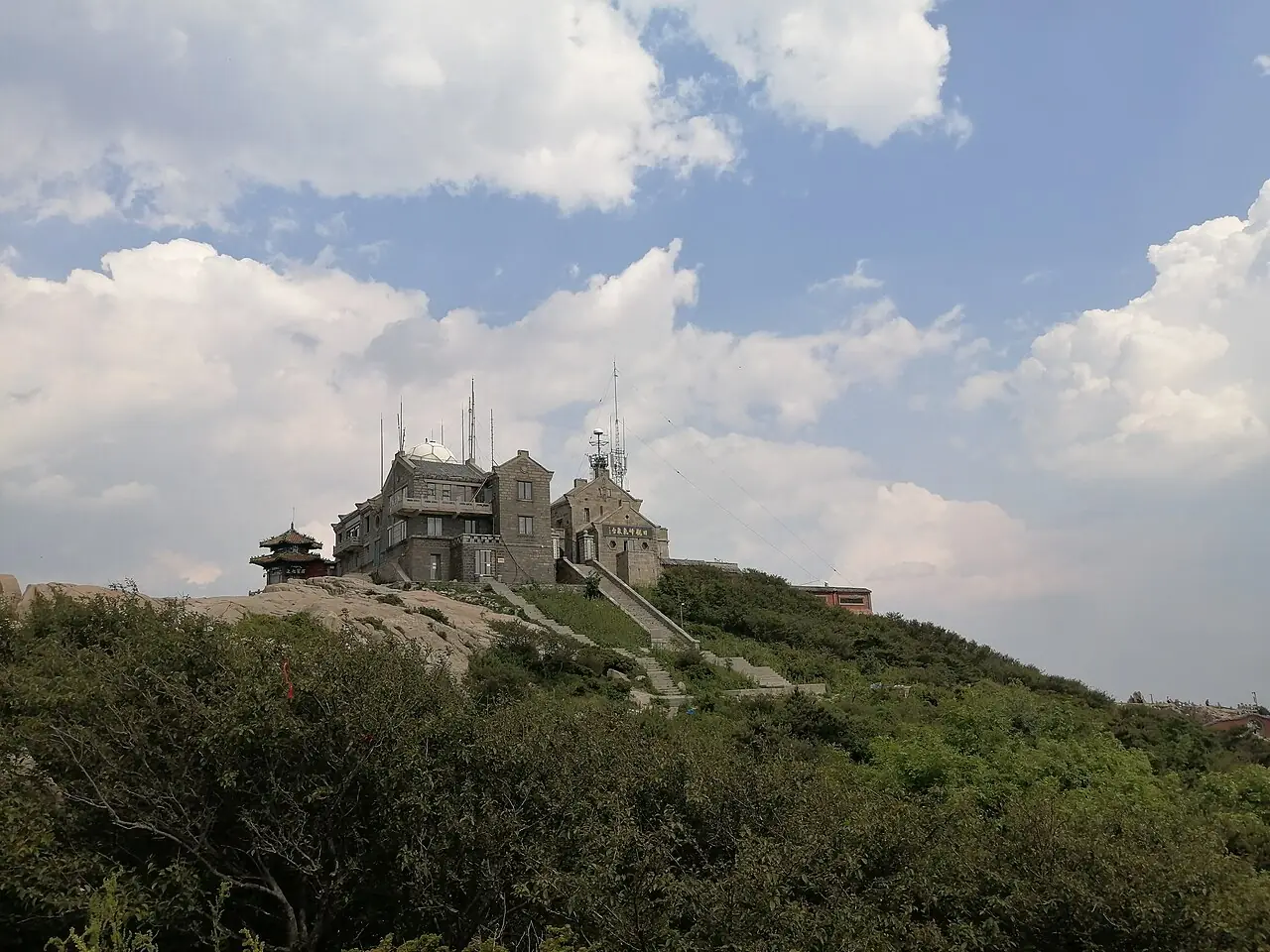
Mount Tai (泰山, Tai Shan) rises dramatically from the plains of central Shandong Province to an elevation of 1,545 meters, the highest of China's Five Great Mountains (五岳, Wuyue). Its granite massif dominates the surrounding landscape, with sheer cliffs, ancient pine forests, and deeply incised valleys carved by millennia of erosion. Historic stone stairways — most famously the 6,660-step Central Route — wind their way up the mountain, passing through a series of majestic gates and arched bridges.
The mountain's climate varies sharply with elevation. At the base, temperate conditions support mixed deciduous forests of oak, maple, and pine, while the upper reaches are cooler and wind-swept, home to hardy conifers and alpine shrubs. The region is rich in bird and small mammal life. Mount Tai is related_to the Yangtze River region (长江, Changjiang) through broader cultural geography, and its foothills connect to the agricultural landscapes of the North China Plain where rice and wheat are cultivated.
Mount Tai has been a site of continuous religious and political significance for over 3,000 years. Emperors of successive dynasties climbed the mountain to perform Fengshan (封禅) — the most solemn of imperial rituals — sacrificing to heaven and earth to affirm the Mandate of Heaven. The mountain is closely related_to Daoism (道教, Daojiao), with numerous temples and shrines dedicated to the Jade Emperor and other Daoist deities. It is also related_to ritual (礼, li) as a tradition, embodying the Confucian virtue of harmony (和, he) between the human and cosmic orders. The mountain is considered a Qi-rich (气, qi) location, a concentration of telluric energy that has drawn pilgrims and meditators for centuries. Spring pilgrimage related_to Mount Tai marks the start of the annual climbing season, when crowds ascend to view the legendary sunrise from the Jade Emperor Peak.
Each relationship represents a meaningful semantic link between Mount Tai and other entities in the Atlas knowledge graph.
These 24 solar terms mark when Mount Tai appears, peaks, or transforms through the seasons.
Solar term #1 · Feb 3-5 · Wood
Spring pilgrimage to Mount Tai
View on Dao of Seasons ↗These entities share semantic relationships with Mount Tai in the Atlas knowledge graph.
Daoism (道教), the teaching of the Way, is a philosophical and religious tradition originating in ancient China that cente ...
Ritual (仪式, yíshì) refers to formalized patterns of conduct that connect human life to cosmic and social order. Through ...
Harmony (héxié) is a core value in Chinese philosophy, representing balance, coherence, and peaceful coexistence between ...
Qi (气) is the fundamental life force and animating energy that flows through all living and non-living things, the vital ...
Silk (丝绸, sīchóu) is a natural protein fiber produced by the silkworm (silkworm) (Bombyx mori) as it forms its cocoon
The panda (熊猫, xióng māo) is an iconic species native to the bamboo forests of Sichuan, Yunnan, and the Yangtze River ba ...
The Yangtze River (长江, Cháng Jiāng) is the longest river in Asia and the third-longest in the world, flowing 6,300 kilom ...
Mount Tai (泰山) is the Atlas's most sacred place—the eastern peak of the Five Great Mountains where emperors performed the Fengshan sacrifice to heaven for over 3,000 years. As a UNESCO World Heritage Site, it anchors the Place domain to Concept (Daoism, ritual, harmony, qi) and Practice (pilgrimage, meditation). Its 6,660-step central route is one of China's great cultural landscapes.
Mount Tai is the premier sacred mountain of Chinese civilization—a site of continuous imperial ritual from the Zhou dynasty to the Qing.
The mountain's qi concentration has made it a site of Daoist cultivation and pilgrimage for millennia.
Spring pilgrimage to Mount Tai marks the start of the climbing season—a human calendar aligned with natural rhythms.
CCTV Video News Agency · 83K views · YouTube ↗
New China TV · 7K views · YouTube ↗
Central Atlas — provides Overview pages for all entities. Does not produce original entity content, only aggregates and references.
Owner since 2026-01-01