Sichuan pepper (花椒) is a spice made from the husks of prickly ash berries (Zanthoxylum genus), known for its unique numbing sensation (麻, má) and citrusy aroma, essential to Sichuan cuisine.
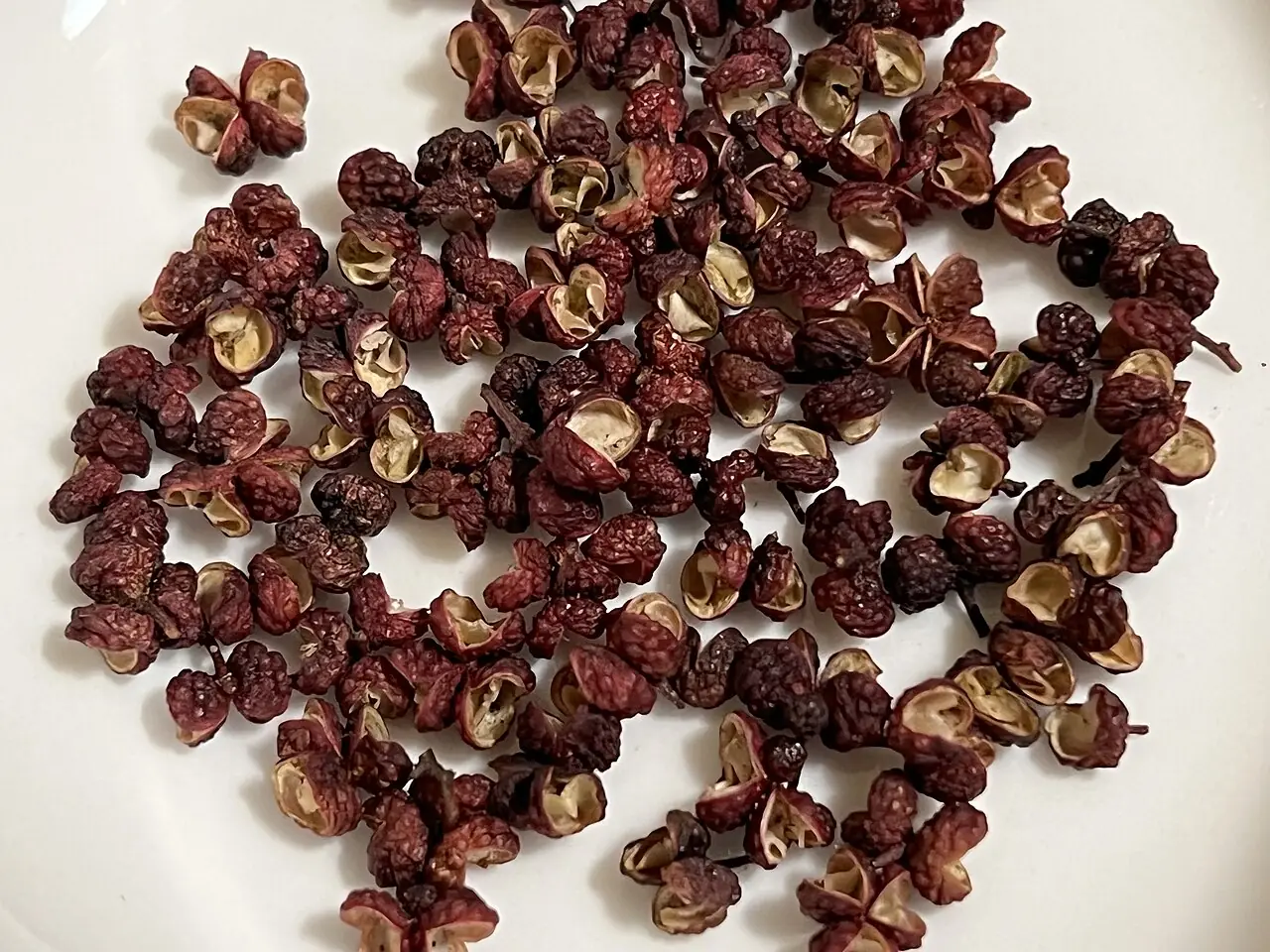
Sichuan pepper (花椒, huājiāo, "flower pepper") is not a true pepper (Piper nigrum) but the dried husks of berries from several species in the genus Zanthoxylum, family Rutaceae (the citrus family). The two most important species are Zanthoxylum bungeanum (red Sichuan pepper), most common in Sichuan cooking, and Zanthoxylum schinifolium (green Sichuan pepper). The spice consists of the papery outer husks of the berries, which are collected, dried, and de-seeded—the dark seeds are themselves gritty and flavorless and are typically discarded.
The defining characteristic of Sichuan pepper is its unique numbing sensation on the lips and tongue, known as 麻 (má) in Chinese. This effect is caused by the compound hydroxy-alpha-sanshool, which stimulates the touch-sensitive nerve receptors in the mouth to vibrate, creating a tingling, buzzing sensation akin to a mild electrical current. This trigeminal stimulation, combined with the spice's citrusy, piney aroma, creates an experience unlike any other spice. The numbing effect acts as a flavor amplifier, making other tastes more vivid and preparing the palate for bold flavors.
Sichuan pepper is native to the mountainous regions of southwestern China, particularly Sichuan, Yunnan, and Gansu provinces. The plant is a deciduous shrub or small tree that grows 3-5 meters tall, with compound leaves and small greenish flowers. The berries ripen from green to red in late summer to early autumn, and are harvested just before full ripeness to ensure the husks open properly for drying. The Chinese province of Sichuan produces the highest-quality huājiāo, prized for its intense numbing potency and complex floral-citrus aroma.
The combination of Sichuan pepper with dried chili peppers creates the defining "numbing-and-spicy" (麻辣, málà) flavor profile of Sichuan cuisine. Together, they form the foundation of iconic dishes such as mapo tofu (麻婆豆腐), kung pao chicken (宫保鸡丁), and shui zhu yu (水煮鱼). Beyond the má là pairing, Sichuan pepper is used in a fermented chili bean paste called doubanjiang (豆瓣酱), salt-and-pepper seasoning (椒盐), and five-spice powder (五香粉). In Japan, the related species Zanthoxylum piperitum (sanshō, 山椒) is used as a subtle garnish for eel (unagi) and a seasoning for soba noodles, with a milder, more citrus-forward character than the Chinese variety.
Each relationship represents a meaningful semantic link between Sichuan Pepper and other entities in the Atlas knowledge graph.
These entities share semantic relationships with Sichuan Pepper in the Atlas knowledge graph.
Sichuan (四川, Sìchuān) is a province in southwestern China, renowned for its dramatic topography encompassing the Sichuan ...
发酵 (Fājiào) is the microbial transformation of ingredients into preserved, flavour-rich foods central to Chinese cuisine ...
Salt (盐) is a mineral composed primarily of sodium chloride (NaCl), the most fundamental seasoning in East Asian cuisine ...
The panda (熊猫, xióng māo) is an iconic species native to the bamboo forests of Sichuan, Yunnan, and the Yangtze River ba ...
Tofu (豆腐) is a food prepared by coagulating soy milk and pressing the resulting curds into soft blocks, a staple source ...
Rice (米/稻) is the seed of Oryza sativa, a cereal grain that is the staple food for more than half the global population, ...
Umami (鲜味, xiān wèi) is the savory fifth taste deeply embedded in Chinese culinary tradition. The character 鲜 (xiān) con ...
Yunnan (云南, Yúnnán, 'south of the clouds') is a province in southwestern China renowned for its extraordinary biodiversi ...
Sichuan Pepper (花椒) is the Atlas's most distinctive spice—not a true pepper but a citrus-family husk that creates a unique numbing sensation (麻, má) through the compound hydroxy-alpha-sanshool. It is the defining ingredient of Sichuan cuisine's málà (numbing-and-spicy) flavor profile, pairing with chili to create one of the world's most distinctive culinary identities. Sichuan pepper connects Ingredient to Place (sichuan), Practice (fermentation—it's used in Sichuan ferments), and Concept (the trigeminal sensory experience).
Sichuan pepper's numbing effect amplifies umami perception by stimulating trigeminal nerve receptors—a flavor synergy unique to Sichuan cuisine.
Sichuan pepper berries are harvested in late summer to early autumn, just before full ripeness.
The málà flavor profile (numbing + spicy) is one of Chinese cuisine's most distinctive contributions to global gastronomy.
Anthony Bourdain Parts Unknown · 678K views · YouTube ↗
Souped Up Recipes · 97K views · YouTube ↗
Central Atlas — provides Overview pages for all entities. Does not produce original entity content, only aggregates and references.
Owner since 2026-01-01