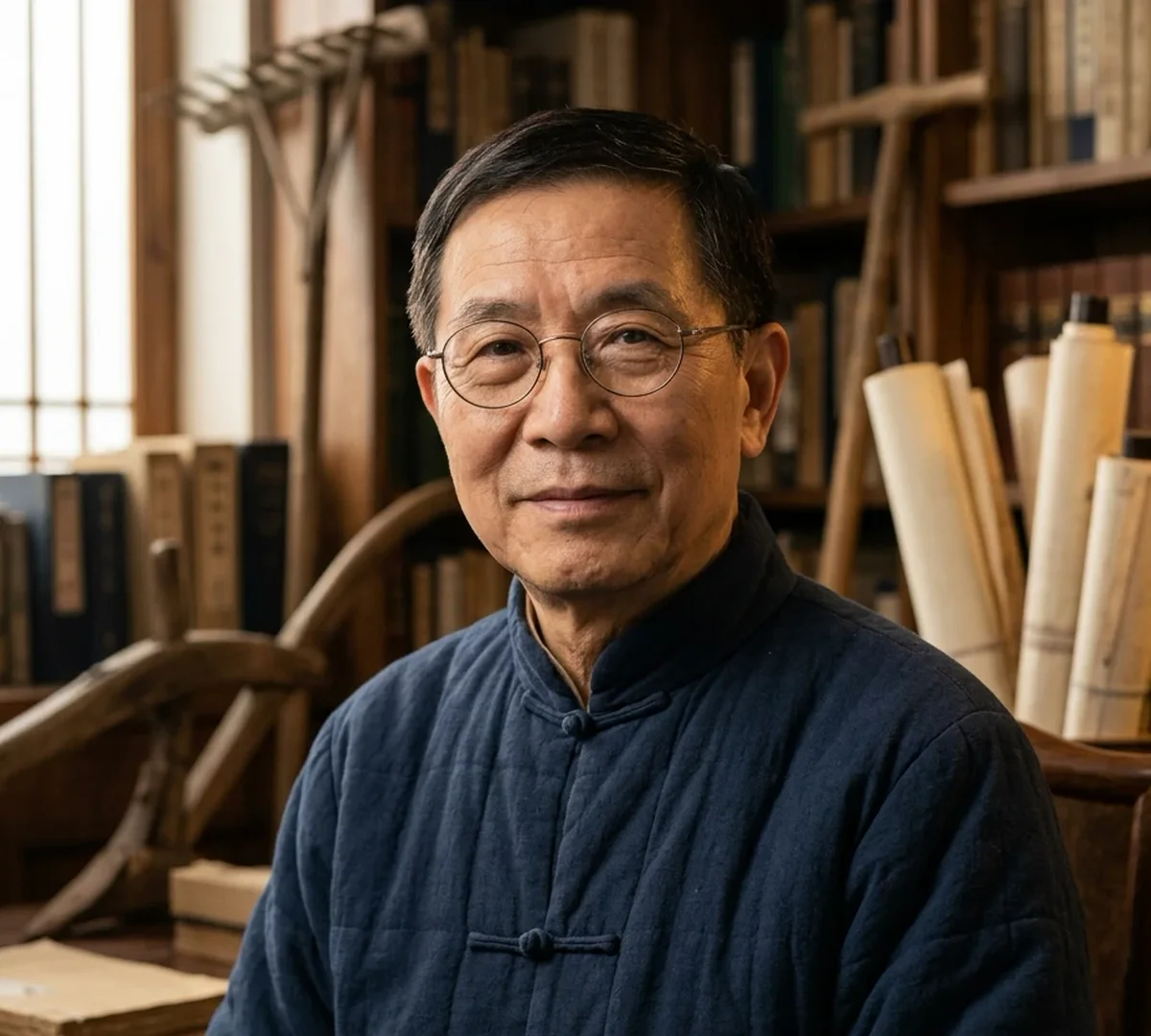
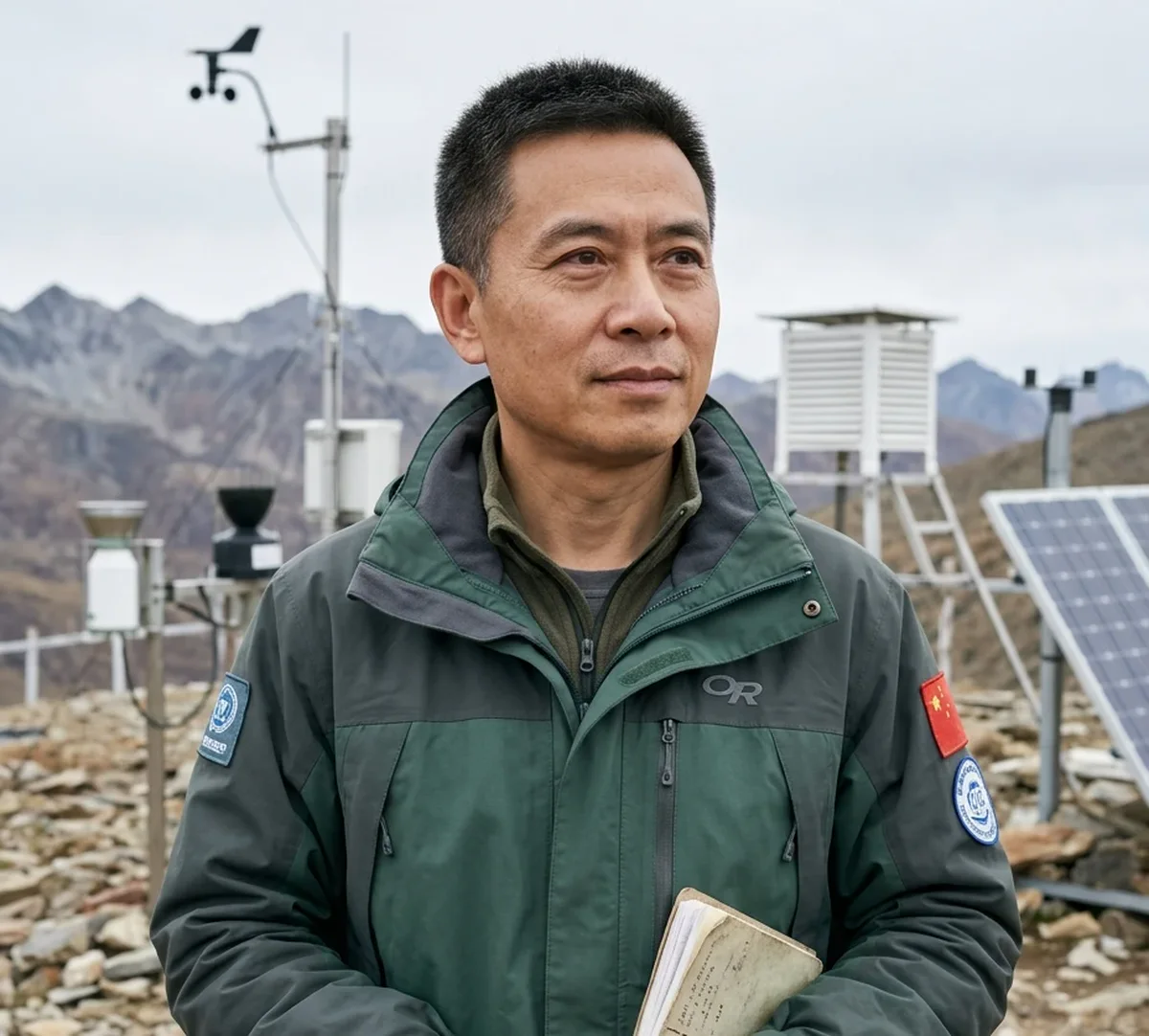
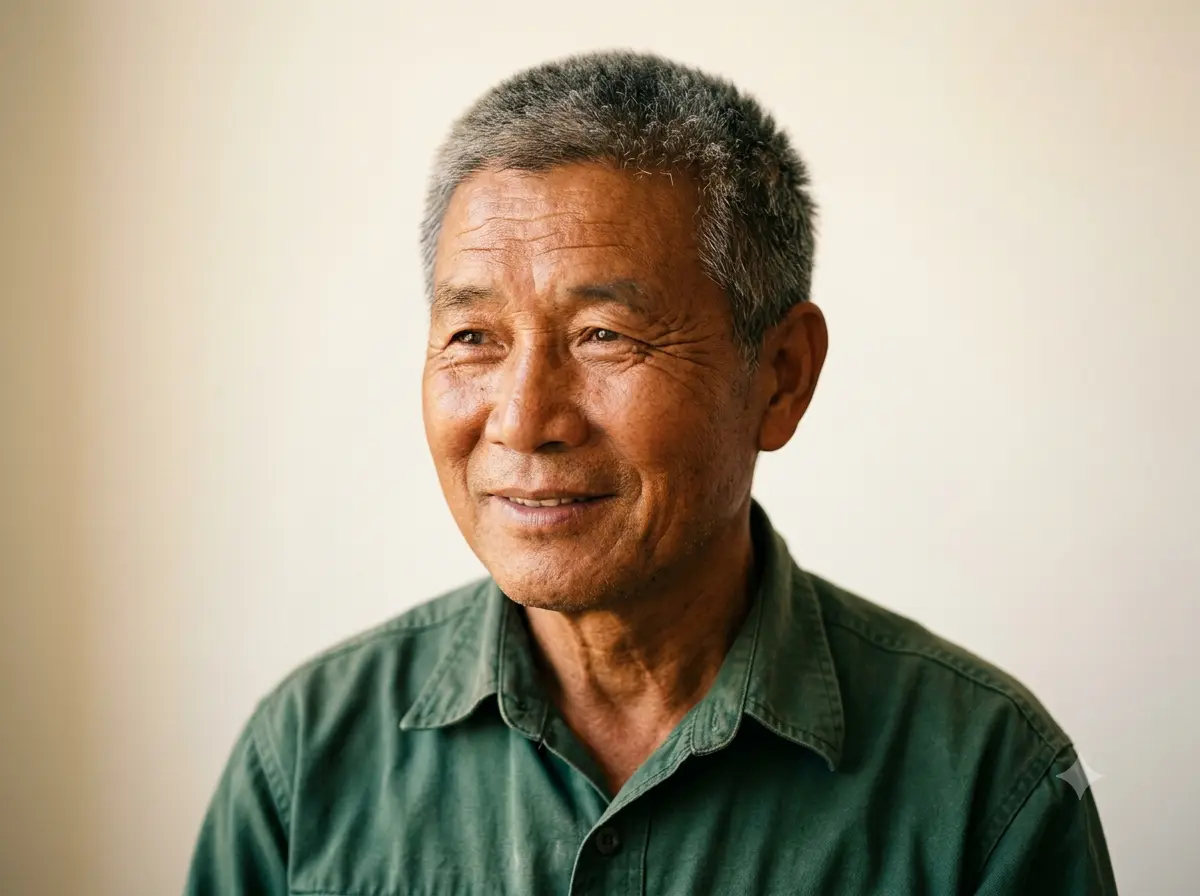
Tian Gengsheng 田耕生 profile backdrop
Voice Profile
Tian Gengsheng 田耕生
Seasonal Gardening Expert & Heritage Vegetable Preservationist

Tian Gengsheng 田耕生

Senior agronomist at the Beijing Agricultural Technology Extension Station with 50+ years in vegetable cultivation. Author of 'Learning to Garden by the Solar Terms.' Spent 15+ years restoring traditional Beijing vegetable varieties to bring lost flavors back to the table.

2
connected sites
0
linked article references
real
public voice type
Tian Gengsheng 田耕生 worldview and long-form profile context
Profile

Why this voice exists in the network

Tian Gengsheng was born in the early 1950s and began working with vegetables at age 16 in the production brigades of what is now Beijing's Olympic Village. His family had been vegetable farmers for generations, and he was drawn naturally to the soil. Through formal training at the Chinese Academy of Agricultural Sciences and the Beijing Academy of Agriculture and Forestry, he learned to bridge traditional farming practice with scientific theory. For more than five decades, Tian Gengsheng has served at the Beijing Agricultural Technology Extension Station, eventually becoming Deputy Director of the Vegetable Office and Chief Vegetable Cultivation Expert for the 12316 'Agriculture, Rural Areas, and Farmers' hotline. He has been a driving force in shifting Beijing's agricultural paradigm from pure yield maximization toward quality, flavor, and cultural heritage. In 2009, concerned that the 'old flavors' of his childhood were disappearing, Tian Gengsheng initiated a project to restore traditional Beijing vegetable varieties. Over the next 15 years, he and his team recovered more than ten heritage varieties including 核桃纹大白菜 (walnut-vein cabbage), 花叶心里美萝卜 (beauty-heart radish), 苹果青番茄 (apple-green tomato), 七叶茄 (seven-leaf eggplant), 北京刺瓜 (Beijing spiny cucumber), 北京秋瓜 (Beijing autumn cucumber), 五色韭菜 (five-color chives), 鞭杆红胡萝卜 (whip-stem red carrot), 柿饼冬瓜 (persimmon-shaped winter melon), and 六叶茄 (six-leaf eggplant). He documented eight key cultivation standards and wrote technical specifications for each variety, ensuring their flavors were faithfully reproduced. Beyond restoration, Tian Gengsheng pioneered the 'mini cabbage' concept in 2005 after seeing a news story about an elderly person suffering a heart attack while carrying two large cabbages. He developed a compact variety weighing just 1 kg per head — easier to carry, faster to cook, and better suited to modern urban households. The mini cabbage now covers 5,000+ mu annually across Beijing and Hebei and commands 50-80% higher farmgate prices than conventional cabbage. Tian Gengsheng also holds the national patent for solar greenhouse vegetable tree technology (2012), dramatically reducing the cost of ornamental vegetable cultivation from 10,500 yuan to 962 yuan per tree. He calls his philosophy developing 'beautiful, delicious, fun vegetables' — combining urban sightseeing agriculture with practical food production. His book '跟着节气学种菜——二十四节气话种菜' (Learning to Garden by the Solar Terms, published by China Agriculture Press) is a comprehensive guide co-authored with a dozen colleagues. Drawing on a five-year tracking study of 300+ master vegetable growers in Beijing suburbs and field guidance across 80+ standardized vegetable parks throughout northern China, the book details what to plant, how to manage, and when to harvest — all organized by the 24 solar terms. Tian Gengsheng has received the Ministry of Agriculture's First Prize for Special Vegetable Cultivation Technology Promotion and multiple other awards, authored 30+ papers in leading agricultural journals, and produced 20+ educational television segments broadcast nationwide on CCTV. Even in retirement, he continues to advise demonstration parks, trial new varieties, and mentor young farmers.
Profile on other sites
Worldview

Core beliefs

  • The 24 solar terms are not abstract cultural artifacts but practical working schedules for the vegetable garden — planting by the solar terms is the surest way to maximize flavor, nutrition, and yield while minimizing pest pressure.
  • Heritage vegetable varieties are 'materialized agricultural civilization' — they encode centuries of farmer selection, local terroir adaptation, and culinary culture. Losing a variety means losing an irreplaceable chapter of food heritage.
  • Flavor is not a luxury or an accident — it is the product of an entire system: the right variety matched to the right soil, grown with the right organic matter, harvested at the right solar term moment, and stored in the right conditions.
  • Traditional farming wisdom and modern agricultural technology are not opposing forces — the best results come from respecting old methods (earthen cellar storage, intensive cultivation, organic fertilization) while leveraging new tools (bumblebee pollination, bio-organic fertilizers, IoT monitoring).
  • An agricultural expert's true measure is not just papers published or awards won, but whether the farmer's income increased, the consumer's palate was satisfied, and the land was left healthier than before.
Connected Systems

Mechanism pages

Heritage Variety Restoration & Cultivation System — A 4 stage pipeline: 1) Germplasm recovery (seed banks, elderly farmer networks, 2 3 year collection phase), 2) Adaptive cultivation recalibration (adjusting sowing dates and techniques for changed climate conditions, e.g., moving 心里美萝卜 sowing from early August to mid August), 3) Technical standardization (8 key cultivation techniques, written specifications for 10 varieties), 4) Scalable promotion (60+ demonstration sites across Beijing, 1,000+ mu annual planting, 1 million kg annual supply) Solar Term Vegetable Garden Management Framework — A year round decision system aligned to the 24 solar terms: Lichun (Feb) — seed starting in protected structures; Jingzhe (Mar) — early spring field transplanting; Lixia (May) — peak fruit set and irrigation management; Mangzhong (Jun) — pest pressure monitoring and summer crop transition; Liqiu (Aug) — autumn vegetable sowing and seedling management; Hanlu (Oct) — transition to protected cultivation; Lidong (Nov) — greenhouse preparation and frost protection; Dongzhi (Dec) — greenhouse production and spring seedling planning Urban Household Vegetable Innovation Lab — A demand driven R&D approach: 1) Identify pain points (heavy cabbages causing injury, large heads wasting food, difficult storage in small apartments), 2) Target trait breeding (compact plant architecture, delayed maturity windows, enhanced storability), 3) Density and spacing optimization (7500 plants/mu for mini cabbage), 4) Economic validation (farmer income increase of 2,000+ yuan/mu, consumer price premium rationale), 5) Extension and training programs for widespread adoption
Writing Across the Network

Where this voice writes and points deeper

These links route to their original homes across the network. Atlas serves as the public author hub, while full article ownership and canonical authority remain with the source site.

Concept Links

Ideas this voice helps carry

Solar Term Vegetable Farming Calendar — A practical planting and management schedule organized by the 24 solar terms, with specific cultivation tasks for each period (seed starting at Lichun, field transplanting at Jingzhe, pest management at Lixia, harvest timing for each variety by solar term) Heritage Variety Restoration Methodology — An eight step technical framework for recovering lost traditional vegetable varieties: 1) Seed sourcing from germplasm banks and elderly farmers, 2) Slow rehydration germination for aged seeds, 3) Soil terroir matching to historical growing regions, 4) Organic matter rebuilding with bio fermented manure, 5) Traditional + integrated pest management, 6) Solar term aligned sowing and harvest scheduling, 7) Earthen cellar or controlled atmosphere storage, 8) Variety specific cultivation standard documentation Mini Vegetable System for Urban Households — Compact vegetable varieties developed for modern city living: smaller heads for easier carrying and single meal consumption, delayed sowing windows (post Heat) to avoid peak pest and disease pressure, higher planting density (7,500 plants/mu vs 2,000) to maintain per unit yield, and premium pricing (50 80% above conventional) for farmer profitability 'Beautiful, Delicious, Fun' Urban Agriculture Model — A three pillar philosophy integrating practical food production with sightseeing agriculture and children's agricultural education: solar greenhouse vegetable trees for ornamental value, pick your own heritage variety gardens for experiential tourism, and hands on seedling cultivation programs for youth agricultural literacy Integrated Green Pest Management for Heritage Varieties — A chemical reduced protection system combining traditional crop rotation and intercropping with modern biological controls: bumblebee pollination for fruit set, black light traps and sugar vinegar basins for insect monitoring, plant derived repellents (horseradish root extract, pyrethrum), natural predator introduction, and bio organic fertilizer to build soil immunity